BMO Field World Cup 2026 Upgrades: How Toronto Is Preparing for FIFA
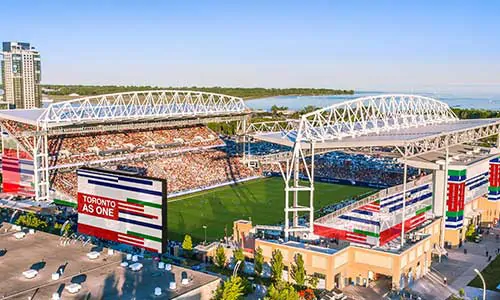
The eyes of the sporting world are firmly fixed on North America as the global soccer tournament gets underway. For soccer fans, the excitement is palpable, and nowhere is this more evident than in Ontario’s capital. The massive undertaking of the BMO Field World Cup 2026 Upgrades: How Toronto Is Preparing for FIFA represents a monumental milestone in Canadian sports history. By transforming a compact, soccer-specific stadium into a state-of-the-art global venue, the city is ready to host some of the most anticipated matches of the tournament. Consequently, understanding how this historic stadium was redesigned on a tight schedule is essential for every football enthusiast.
Table of Contents
- The Road to 2026: Toronto’s Architectural Transformation
- The Architectural Marvel of BMO Field World Cup 2026 Upgrades: How Toronto Is Preparing for FIFA
- A Deep Dive into Stadium Capacity and Seating Configurations
- Financial Scope of BMO Field World Cup 2026 Upgrades: How Toronto Is Preparing for FIFA
- Pitch and Turf Innovation: Stitched Hybrid Grass Technology
- BMO Field World Cup 2026 Upgrades: How Toronto Is Preparing for FIFA Legacies and Beyond
- Transit, Logistics, and City Mobility Planning
- Toronto Match Schedule and the Fan Festival Zone
- Conclusion & Call to Action
- Frequently Asked Questions (FAQ)
The Road to 2026: Toronto’s Architectural Transformation
Originally opened in April 2007 at Exhibition Place, BMO Field has long served as the vibrant home for Toronto FC of Major League Soccer (MLS) and the Toronto Argonauts of the Canadian Football League (CFL). However, hosting a tournament of FIFA’s scale required a fundamental rethink of the stadium’s structural limits. Historically, the venue was built with a relatively modest capacity of around 20,000 spectators, which was later expanded to approximately 30,000 during major renovations between 2015 and 2016. To meet the strict guidelines set by soccer’s governing body, a new, massive wave of modernization was initiated.
Furthermore, the venue is temporarily known as “Toronto Stadium” during the matches to comply with FIFA’s strict guidelines regarding non-sponsor naming rights. The transition from a local stadium to a world-class arena capable of accommodating tens of thousands of international visitors involved complex engineering challenges. In addition, the city had to align its local infrastructure, transit routes, and public safety protocols to handle the massive influx of sports fans. Consequently, this architectural journey has redefined Toronto’s sporting landscape.
The Architectural Marvel of BMO Field World Cup 2026 Upgrades: How Toronto Is Preparing for FIFA
To safely accommodate the global audience, organizers focused heavily on physical and structural changes. The primary goal of the BMO Field World Cup 2026 Upgrades: How Toronto Is Preparing for FIFA was to dramatically increase the seating capacity while ensuring that the spectator experience remained top-tier. Specifically, engineers designed a temporary seating system that added over 17,000 seats to the stadium. This temporary solution was selected because maintaining a permanent 45,000-seat stadium post-tournament would not be financially or operationally sustainable for local sports franchises.
Moreover, the construction of these temporary grandstands required meticulous planning. The massive structures were built in the North and South stands, transforming the stadium’s intimate feel into a bowl-like coliseum. To test the integrity and crowd-flow of these new additions, Toronto FC hosted a match against Inter Miami in May 2026. This historic match drew a record crowd of more than 44,000 fans, serving as a highly successful operational test run before the global tournament officially kicked off. As a result of this trial, minor adjustments were made to the concourse wayfinding and queue management systems to ensure an optimized experience for international visitors.
A Deep Dive into Stadium Capacity and Seating Configurations
Understanding the exact breakdown of the seating configurations highlights the sheer scale of the engineering behind the BMO Field World Cup 2026 Upgrades: How Toronto Is Preparing for FIFA. By utilizing temporary seating, Toronto was able to reach the mandatory FIFA minimum capacity of 45,000 seats without permanently altering the stadium’s footprint. Below is a detailed look at how the seating capacity has shifted:
- Pre-renovation Seating Capacity: Approximately 28,180 to 30,000 seats.
- Temporary Seats Added: 17,756 additional seats.
- North Grandstand Temporary Seats: Approximately 10,000 seats.
- South Grandstand Temporary Seats: Approximately 7,700 seats.
- Total Tournament Capacity: 45,736 seats.
In addition to these raw numbers, safety was the utmost priority. The temporary stands were constructed using high-grade galvanized steel and advanced modular scaffolding, engineered to withstand intense dynamic loads from cheering crowds. Furthermore, the sightlines from these temporary structures were designed using computerized simulation models to guarantee that fans in the highest rows still enjoy an unobstructed view of the pitch. This attention to detail has earned favorable early reviews from stadium architects and visiting sports journalists alike.
Financial Scope of BMO Field World Cup 2026 Upgrades: How Toronto Is Preparing for FIFA
Hosting a tournament of this magnitude requires a substantial financial commitment. When analyzing the BMO Field World Cup 2026 Upgrades: How Toronto Is Preparing for FIFA, the monetary investment reveals a highly structured partnership between multiple levels of government and private enterprises. The overall budget for Toronto to host its portion of the tournament is set at $380 million CAD. Within this budget, a significant portion was allocated directly to stadium capital costs and essential upgrades.
Specifically, the total cost for the stadium renovations escalated to approximately $157.9 million CAD due to inflation, material costs, and scope adjustments during the pre-construction phase. To offset these rising costs, Maple Leaf Sports & Entertainment (MLSE) increased its contribution to $25 million CAD, while the City of Toronto covered the remaining $132.9 million CAD. Consequently, these investments have been managed carefully to avoid exceeding the city’s overall tournament budget. Below is a financial breakdown of the capital allocations:
| Funding Source / Project Component | Amount (CAD) | Primary Purpose |
|---|---|---|
| City of Toronto Capital Contribution | $132.9 Million | Structural enhancements and temporary seating. |
| MLSE Private Investment | $25.0 Million | Hospitality, tech upgrades, and premium suites. |
| Total Stadium Renovation Cost | $157.9 Million | Combined capital budget for Toronto Stadium. |
| Overall Host City Operating Budget | $380.0 Million | Covers operations, fan zones, and municipal logistics. |
| Federal Government Essential Services | $320.0 Million | Security, border enhancements, and emergency services. |
This table demonstrates that while the capital costs were high, the long-term planning was designed to ensure that the public funds spent would translate into lasting benefits for the community. Meanwhile, provincial funding from Ontario also played a crucial role in securing the final financial sign-offs, showcasing a unified effort across all levels of Canadian government.
Pitch and Turf Innovation: Stitched Hybrid Grass Technology
One of the most technically demanding aspects of preparing the stadium was meeting FIFA’s uncompromising playing surface requirements. Previously, BMO Field utilized a hybrid grass pitch, but the intense schedule of hosting six high-profile matches in a short period necessitated a complete turf overhaul. To solve this, the stadium operations team turned to specialized agricultural engineering.
Specifically, a brand-new pitch was grown in a controlled greenhouse environment by Green Horizons. The premium sod was transported to the stadium and laid down in late November and December of 2025. Following the installation, technicians utilized specialized stitching machines to integrate synthetic fibers into the natural grass. This “stitched grass” system contains roughly 5% synthetic blades interwoven with 95% natural turf. Consequently, the pitch offers unparalleled stability, heavily reducing the risk of divots and player injuries during aggressive play.
In addition to the hybrid turf, the underlying systems were completely modernized. A sophisticated vacuum-drainage and pitch-heating system was installed. This advanced technology allows stadium crews to quickly extract excess moisture from the surface in the event of a sudden summer downpour, ensuring the pitch remains playable and preventing costly match delays.
BMO Field World Cup 2026 Upgrades: How Toronto Is Preparing for FIFA Legacies and Beyond
While the temporary stands will eventually be removed, a massive portion of the BMO Field World Cup 2026 Upgrades: How Toronto Is Preparing for FIFA will remain as a permanent legacy for local sports fans. This ensures that the public money spent on the upgrades continues to pay dividends long after the final whistle of the tournament. These permanent upgrades will dramatically improve the fan experience for Toronto FC and Argonauts matches in the future.
Key permanent elements include:
- State-of-the-Art LED Videoboards: Four new massive screens have been installed in each corner of the stadium, replacing the older, single screen.
- Upgraded Broadcast Infrastructure: The stadium’s media facilities and fiber-optic cabling were completely overhauled to accommodate global 4K HDR television broadcasts.
- Modernized Lighting: High-efficiency LED sports lighting has replaced the old system, meeting the strict lux levels required by international broadcast networks.
- Expanded Locker Rooms: Six additional lockers were added to the team dressing rooms, bringing the total to 26 premium lockers, which is the international standard.
- Rooftop VIP Patio: A new, permanent premium hospitality patio capable of hosting 1,000 guests has been constructed, elevating the stadium’s premium ticket options.
- Improved Concourse and Restrooms: Modernized concession stands, upgraded plumbing, and expanded restroom facilities have been integrated throughout the main concourse.
Consequently, these permanent improvements elevate Toronto Stadium into a premier, world-class athletic facility. Local fans will enjoy superior sightlines, crystal-clear audio, better food variety, and improved cellular connectivity during local MLS and CFL matches for decades to come.
Transit, Logistics, and City Mobility Planning
Transporting 45,000 passionate spectators to and from Exhibition Place on match days is a massive logistical challenge. Because BMO Field is situated in a highly active urban park, standard vehicle parking is extremely limited. Therefore, the City of Toronto developed a comprehensive mobility framework designed to prioritize public transportation, active transit, and crowd safety.
A major pillar of this transit plan is the implementation of dedicated transit priority corridors. For example, priority streetcar lanes have been established on Bathurst Street to ensure rapid, unimpeded light rail transit directly to the stadium area. Additionally, Metrolinx and GO Transit have significantly increased train frequencies on the Lakeshore West line, which stops directly at the Exhibition GO Station located just steps from the stadium gates.
Meanwhile, active transportation has been heavily promoted. The city has established expansive, secure bicycle valet parking areas and mapped out dedicated walking paths from the downtown core. For those traveling from further away, shuttle buses operate from major subway hubs, including Union Station. By discouraging personal vehicle use and implementing strict road closures on Princes’ Boulevard, the city has successfully minimized bottlenecking and kept the transit experience smooth.
Toronto Match Schedule and the Fan Festival Zone
Toronto is proudly hosting a total of six matches during the tournament. This includes five highly competitive group stage matches and one crucial Round of 32 knockout match. The highlight of the schedule for local fans is undoubtedly the opening match for Canada’s Men’s National Team, which marked the first-ever men’s World Cup match on Canadian soil. Below is the official schedule for matches hosted at Toronto Stadium:
| Match Day | Match Date (2026) | Match Type | Key Teams Featured |
|---|---|---|---|
| Match 1 | Friday, June 12 | Group Stage (Group B) | Canada vs. Bosnia and Herzegovina |
| Match 2 | Wednesday, June 17 | Group Stage (Group H) | Uzbekistan vs. Colombia |
| Match 3 | Saturday, June 20 | Group Stage | Group Stage Match |
| Match 4 | Tuesday, June 23 | Group Stage | Group Stage Match |
| Match 5 | Friday, June 26 | Group Stage | Group Stage Match |
| Match 6 | Thursday, July 2 | Round of 32 (Knockout) | Group K Runner Up vs. Group L Runner Up |
For the hundreds of thousands of fans who do not have stadium tickets, the city has created the official FIFA Fan Festival at Fort York and The Bentway. This massive, free-admission outdoor festival serves as Toronto’s central celebration hub. Visitors can watch live broadcasts of every match on giant high-definition screens, enjoy dynamic music programming, sample diverse culinary options from local food trucks, and participate in family-friendly interactive soccer challenges. This festival truly embodies the city’s official host theme: “The World in a City”.
Conclusion & Call to Action
The successful execution of the BMO Field World Cup 2026 Upgrades: How Toronto Is Preparing for FIFA stands as a brilliant example of modern urban planning and stadium engineering. Through strategic financial partnerships, cutting-edge turf technology, and innovative temporary seating structures, Toronto has created a world-class arena while leaving a lasting, sustainable sports legacy for the community. The city has proven that it is fully prepared to welcome the globe and celebrate the beautiful game on its grandest stage.
To learn more about the official tournament guidelines and schedule, visit the official FIFA Portal or check out the municipal transit updates on the City of Toronto Host Portal. Are you planning on attending any of the matches in Toronto, or visiting the Fan Festival? Share your thoughts, match predictions, and stadium experiences in the comments below!
Frequently Asked Questions (FAQ)
Q1: Why is BMO Field referred to as “Toronto Stadium” during the FIFA World Cup?
A: FIFA regulations strictly prohibit stadiums from using commercial sponsor names unless those companies are official FIFA partners. Therefore, BMO Field is temporarily renamed “Toronto Stadium” for the duration of the tournament.
Q2: How much did the BMO Field renovations cost, and who paid for them?
A: The stadium renovations cost approximately $157.9 million CAD. The City of Toronto contributed more than $132.9 million CAD, while Maple Leaf Sports & Entertainment (MLSE) invested $25 million CAD to cover capital costs and high-end technological upgrades.
Q3: How many extra seats were added to BMO Field for the tournament?
A: Over 17,000 temporary seats were added to the stadium, increasing the overall tournament capacity to 45,736. Approximately 10,000 temporary seats were built in the North Grandstand and 7,700 seats in the South Grandstand.
Q4: What kind of grass is used on the pitch at Toronto Stadium?
A: The pitch uses a state-of-the-art stitched hybrid grass system grown by Green Horizons. It consists of 95% natural grass reinforced with 5% synthetic fibers woven into the sod, which is supported by an advanced under-soil heating and vacuum-drainage system.
Q5: What are the long-term legacy benefits of the stadium upgrades?
A: While the extra seating is temporary, permanent legacy upgrades include four new massive corner LED videoboards, modernized high-definition broadcast lighting, 26-locker team dressing rooms, a 1,000-capacity rooftop patio, and completely modernized public concourses and restrooms.
Q6: How can fans get to the stadium without a car?
A: Fans are highly encouraged to use public transit. The best options include taking the GO Transit Lakeshore West train directly to the Exhibition GO Station or using the dedicated transit-priority streetcar lanes along Bathurst Street. Active transit paths and secure bike valets are also widely available.