FIFA Calendar Explained: Key Changes Leading to World Cup 2026
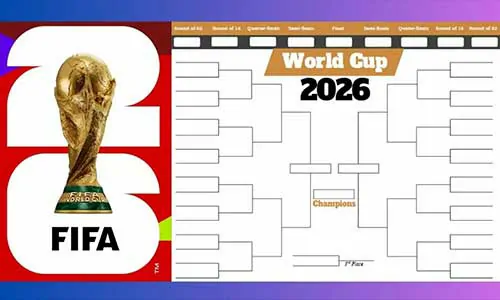
As the global football community prepares for the highly anticipated FIFA World Cup 2026, which will be jointly hosted by the United States, Canada, and Mexico, major structural reforms are taking place behind the scenes. Operating a tournament of this unprecedented scale requires extensive logistical coordination, particularly regarding how domestic club leagues and international fixtures align. To help fans, clubs, and analysts navigate this new era of football scheduling, we present the FIFA Calendar Explained: Key Changes Leading to World Cup 2026. This detailed guide breaks down the fundamental shifts in the International Match Calendar (IMC), their implications for player welfare, and how domestic leagues will adapt.
Table of Contents
- Why the Revised FIFA Calendar Matters for Modern Football
- The New 48-Team Format and Its Scheduling Impact
- Demystifying the Merged International Breaks
- Mandatory Player Release Periods and Club-Country Balance
- The Impact on Domestic Leagues: A Deeper Look
- Player Welfare Under the Updated FIFA Guidelines
- Summary Table of Key Calendar Dates and Milestones
- Frequently Asked Questions (FAQs)
- Conclusion: The Future of Global Football Scheduling
Why the FIFA Calendar Explained: Key Changes Leading to World Cup 2026 Matters for Modern Football
Modern football is characterized by an relentless pursuit of expansion, resulting in an increasingly dense fixture schedule. Elite players now routinely participate in domestic leagues, continental club cups, domestic knockout tournaments, and national team duties. Consequently, players often find themselves on the pitch for more than 60 matches per season, leading to severe physical strain and heightened injury risks. To address these critical challenges, football’s governing body has overhauled the scheduling framework.
To understand the context, we must explore why the FIFA Calendar Explained: Key Changes Leading to World Cup 2026 represents a paradigm shift. In previous years, the friction between club and country reached an all-time high. Club managers regularly complained about the physical toll of international travel and excessive player wear-and-tear. By reconstructing the calendar, FIFA aims to streamline the international window system, reducing the travel burden while preserving the prestige of representing one’s country.
Furthermore, this reformed calendar is not merely a temporary fix; it is designed to establish a sustainable long-term structure from 2025 through 2030. As a result, national associations can plan their competitive matches with greater certainty, and clubs can manage their squads more efficiently. In essence, the new calendar seeks to restore a sense of balance to an ecosystem that was rapidly approaching a breaking point. Consequently, keeping up with the FIFA Calendar Explained: Key Changes Leading to World Cup 2026 has become essential for anyone working in the sports industry.
The New 48-Team Format and Its Scheduling Impact
The centerpiece of the upcoming changes is, of course, the expansion of the World Cup itself. For the first time in history, 48 teams will participate in the final tournament, a massive increase from the traditional 32-team format. Originally, FIFA proposed a format comprising 16 groups of three teams. However, following a rigorous review focused on sporting integrity, player welfare, and fan experience, the FIFA Council unanimously voted to adjust this to 12 groups of four teams.
Consequently, the total number of matches in the tournament will balloon from 64 to 104. While this ensures that every qualified team is guaranteed a minimum of three matches, it also means the tournament requires a longer period to complete. Specifically, the World Cup will span 39 days, culminating in the final on Sunday, July 19, 2026. Therefore, looking closely at the FIFA Calendar Explained: Key Changes Leading to World Cup 2026 reveals how these logistical pieces must fit together perfectly to avoid completely halting domestic club competitions.
Moreover, the expansion means that additional continental spots have been allocated across all confederations. This has directly influenced the qualification schedules in South America (CONMEBOL), Europe (UEFA), Africa (CAF), Asia (AFC), and North America (CONCACAF). By analyzing the FIFA Calendar Explained: Key Changes Leading to World Cup 2026, one can see how tournament design affects qualification pathways. With more matches to be played during the qualifying phases, the international windows had to be thoroughly optimized to ensure that teams can complete their fixtures without adding extra stress to the players’ already crowded schedules.
Demystifying the Merged International Breaks: The FIFA Calendar Explained: Key Changes Leading to World Cup 2026
Perhaps the most significant structural change for the 2026 season and beyond is the reorganization of the autumn international breaks. Historically, the men’s international calendar featured separate nine-day breaks in both September and October. During these breaks, players would leave their domestic clubs, travel to join their national teams, play two matches, travel back, play a few club matches, and then repeat the entire process just a few weeks later.
When studying the FIFA Calendar Explained: Key Changes Leading to World Cup 2026, the consolidation of September and October matches stands out as a highly logical solution. Starting in 2026, these two separate windows will be merged into a single, extended 16-day window. During this single break, national teams will play four matches instead of two. On the other hand, the March, June, and November international windows will remain unchanged, preserving their traditional nine-day, two-match structure.
This restructuring is highly beneficial for several reasons. First, it significantly reduces transcontinental travel for elite players. For instance, a South American player competing in the English Premier League will only need to fly across the Atlantic once during the autumn, rather than twice. Consequently, this minimizes jet lag and allows for more consistent training blocks. Second, club managers benefit from greater continuity, as their squads will not be repeatedly disrupted within a short timeframe. Ultimately, this change aims to elevate the quality of both club and international football by ensuring players are fresher and better prepared.
| International Window | Old Format (Pre-2026) | New Format (2026 & Beyond) | Primary Benefit |
|---|---|---|---|
| September Break | 9 Days, 2 Matches | Merged into a 16-Day, 4-Match Window (Late Sept/Early Oct) | Reduces travel fatigue, saves flight miles, provides club continuity. |
| October Break | 9 Days, 2 Matches | ||
| November Break | 9 Days, 2 Matches | 9 Days, 2 Matches (Unchanged) | Maintains traditional late-autumn qualifiers. |
| March Break | 9 Days, 2 Matches | 9 Days, 2 Matches (Unchanged) | Spring preparation and playoff matches. |
Mandatory Player Release Periods and Club-Country Balance
Another major pillar of the FIFA Calendar Explained: Key Changes Leading to World Cup 2026 is the regulation of player release periods. In past tournament cycles, the time allocated for pre-tournament training camps was often highly inconsistent. For the 2026 edition, FIFA has established a strict timeline to ensure fairness for both clubs and national associations. The mandatory release period for players participating in the tournament will begin on Monday, May 25, 2026.
This date is strategically placed directly after the conclusion of major domestic leagues on Sunday, May 24, 2026. However, FIFA has also introduced a specific clause for flexibility: exemptions may apply to players involved in the final matches of continental club competitions (such as the UEFA Champions League final), with an absolute cutoff date of May 30, 2026. Consequently, coaches will have a guaranteed preparation window of approximately two weeks before the tournament kicks off on June 11, 2026.
This balance is a core pillar of the FIFA Calendar Explained: Key Changes Leading to World Cup 2026. By keeping the combined rest, release, and tournament duration at exactly 56 days—matching the duration of the 2010, 2014, and 2018 World Cups—FIFA has expanded the tournament’s scale without increasing the total timeframe that players are away from their clubs. This compromise was critical in securing the support of the European Club Association (ECA) and global player unions to ensure the sport remains sustainable for all parties involved.
The Impact on Domestic Leagues: A Deeper Look at the FIFA Calendar Explained: Key Changes Leading to World Cup 2026
Indeed, the FIFA Calendar Explained: Key Changes Leading to World Cup 2026 is not just an international concern; it radically disrupts club football. Major domestic leagues, particularly those in Europe, must adjust their schedules to accommodate both the extended summer tournament and the late-September merged international window. This requires meticulous planning from league organizers to avoid fixture congestion later in the winter.
Take the English Premier League as a primary example. Because the World Cup final will take place on July 19, 2026, the league is forced to delay the start of the 2026-2027 domestic season. To prioritize player safety and recovery, the league has mandated a minimum 33-day break between the World Cup final and the beginning of the new domestic season. As a result, the Premier League will not kick off until mid-August, compressing the domestic calendar and potentially eliminating traditional winter breaks.
In contrast, leagues operating on a calendar-year schedule (from spring to autumn), such as Major League Soccer (MLS) in the United States and Canada, face a different set of challenges. These leagues must pause their competitions entirely during the World Cup to ensure their star players can represent their countries without missing crucial club matches. Consequently, this creates a highly congested schedule in the spring and autumn months for these leagues, forcing managers to rotate their squads heavily to prevent injuries.
Player Welfare Under the FIFA Calendar Explained: Key Changes Leading to World Cup 2026
With the physical demands on elite athletes reaching unprecedented levels, player welfare has become the defining topic of modern football governance. In response to mounting pressure from players’ unions and medical staff, the governing body has placed athlete health at the center of the updated schedule. Within the framework of the FIFA Calendar Explained: Key Changes Leading to World Cup 2026, player welfare is highly prioritized through concrete scheduling regulations.
One of the most notable player protection measures is the establishment of a dedicated task force on player welfare. This committee is tasked with monitoring player fatigue, analyzing physiological data, and implementing structural safeguards. For example, a mandatory minimum rest period of 72 hours between matches has been strictly codified. This means that teams playing in the group stages of the 2026 World Cup will have guaranteed recovery time, mitigating the risk of soft-tissue injuries caused by overexertion.
Additionally, the merging of the autumn international windows is a direct result of player welfare advocacy. By reducing the frequency of long-haul travel, players are subjected to fewer timezone shifts, which has been scientifically proven to improve sleep patterns, recovery rates, and overall mental health. Therefore, while the expanded tournament format naturally demands more matches, these calendar changes act as a vital safety valve to protect the game’s most valuable assets: the players themselves.
Summary Table of Key Calendar Dates and Milestones
To help you visualize the upcoming footballing cycle, the table below highlights critical dates and structural milestones associated with the FIFA Calendar Explained: Key Changes Leading to World Cup 2026. Understanding these key markers is essential for grasping how the upcoming season will unfold.
| Milestone / Period | Scheduled Date(s) | Scope / Key Rule | Logistical Impact |
|---|---|---|---|
| Last Domestic Club Matches | May 24, 2026 | Applies to all domestic leagues globally. | Marks the end of the 2025-2026 club season. |
| Mandatory Player Release | May 25, 2026 | Clubs must release all selected players. | National team training camps begin. |
| Continental Finals Exception | May 25 – 30, 2026 | Exemptions granted for continental club finals. | Allows completion of tournaments like the UEFA Champions League. |
| World Cup Opening Match | June 11, 2026 | Hosted in North America. | Tournament official kickoff. |
| World Cup Final Match | July 19, 2026 | Concluding match of the tournament. | Establishes the new world champion. |
| Mandatory Player Rest Break | July 20 – Late August, 2026 | Minimum 33-day break required. | Delays the start of the 2026-2027 club season. |
Frequently Asked Questions (FAQs)
To help you quickly digest these sweeping updates, here are the answers to the most common queries regarding the FIFA Calendar Explained: Key Changes Leading to World Cup 2026.
1. What is the most significant change in the FIFA Calendar leading to the 2026 World Cup?
The most dramatic update is the consolidation of the autumn international windows. Starting in 2026, the separate September and October breaks will be merged into a single, extended 16-day window, during which national teams will play four matches. This is designed to reduce long-haul travel fatigue for players representing their countries.
2. How many matches will be played in the expanded 2026 World Cup, and how long is the tournament?
The expanded tournament will feature 48 teams playing a total of 104 matches, a significant increase from the previous 64 matches in the 32-team format. To accommodate this growth, the tournament will span a total of 39 days, concluding with the final on July 19, 2026.
3. When must clubs release their players for the 2026 World Cup?
According to the FIFA Calendar Explained: Key Changes Leading to World Cup 2026, the mandatory player release period begins on Monday, May 25, 2026. This follows the final day of domestic league matches on May 24. However, players involved in continental club finals have an approved exemption allowing them to play until May 30, 2026.
4. How do these calendar changes protect player welfare?
Player welfare is safeguarded by two main mechanisms: first, the 16-day merged international window dramatically reduces the frequency of international travel; second, FIFA has established a dedicated player welfare task force and mandated a strict 72-hour minimum rest period between matches during the tournament itself.
5. Will the 2026 World Cup changes affect the start of the 2026-2027 domestic club season?
Yes. As detailed in the FIFA Calendar Explained: Key Changes Leading to World Cup 2026, the tournament’s late conclusion on July 19, 2026, means domestic leagues must delay their start. For example, the Premier League has mandated a minimum 33-day rest period for players, pushing the opening matches of the 2026-2027 season to mid-August.
6. What is the new group stage format for the 48-team World Cup?
The tournament will feature 12 groups of four teams. The top two teams from each group, along with the eight best third-placed teams, will advance to a newly introduced Round of 32. This format ensures that every qualified team plays a minimum of three group stage matches.
Conclusion: The Future of Global Football Scheduling
In conclusion, managing the global football schedule is an intricate balancing act between sporting ambition, commercial growth, and athlete health. The FIFA Calendar Explained: Key Changes Leading to World Cup 2026 serves as a robust blueprint designed to navigate these competing interests. While the expansion to 48 teams and 104 matches marks a historic milestone in terms of entertainment and global representation, the structural changes to the international breaks and player release periods provide a necessary safety valve.
By merging the September and October international windows into a single, cohesive block and guaranteeing rest periods for elite players, the new calendar successfully addresses long-standing player welfare concerns. As clubs, players, and national associations adapt to these newly established timelines, the beautiful game enters a more structured and sustainable era. You can review the complete planning publications via the official FIFA portal to stay informed of any direct updates.
What are your thoughts on these historic calendar changes? Do you think the merged international breaks will successfully reduce player fatigue, or will the expanded World Cup format still put too much strain on elite squads? You can view further player health reports published on the FIFPro official player welfare platform to form a deeper understanding. Let us know in the comments below, and share this article with your fellow football enthusiasts. Keep bookmarking our page for the latest updates on the FIFA Calendar Explained: Key Changes Leading to World Cup 2026 and other global sports developments!