FIFA Club World Cup 2025: Complete Review of the Expanded Tournament Format
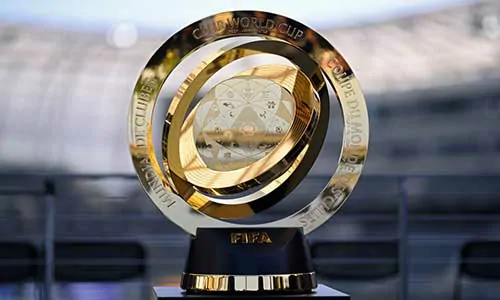
The landscape of global club football changed forever in the summer of 2025. Football fans worldwide witnessed a monumental shift as 32 of the globe’s elite clubs descended upon the United States for a revamped, highly anticipated tournament. If you want to understand how this massive sporting expansion affected players, clubs, and supporters across continents, you are in the perfect place. In this comprehensive guide, we provide a FIFA Club World Cup 2025: Complete Review of the Expanded Tournament Format, examining its intricate structure, the thrilling competitive drama, and what this landmark event means for the future of the beautiful game.
Table of Contents
- 1. The Historical Evolution of the Club World Cup
- 2. FIFA Club World Cup 2025: Complete Review of the Expanded Tournament Format and Structure
- 3. Continental Slot Allocation and Qualified Teams
- 4. On-Field Drama: Key Matches and Major Upsets
- 5. Analyzing the Strategic Impact of the FIFA Club World Cup 2025: Complete Review of the Expanded Tournament Format
- 6. Chelsea’s Road to Glory and Individual Honors
- 7. Commercial Success and Global Broadcasting Innovations
- 8. Looking Ahead: What Lies in Store for 2029 and Beyond?
- 9. FAQs Regarding the FIFA Club World Cup 2025: Complete Review of the Expanded Tournament Format
1. The Historical Evolution of the Club World Cup
For over two decades, the FIFA Club World Cup operated as an annual seven-team tournament. While it succeeded in crowning a global champion, the event was frequently criticized for its predictable nature. Historically, the champions of Europe and South America received direct byes to the semi-finals, meaning they only had to play two matches to hoist the trophy. Consequently, the tournament often lacked the high-stakes drama expected of a true global championship.
In response to these criticisms, FIFA President Gianni Infantino championed a radical overhaul. The objective was simple yet highly ambitious: to design a comprehensive club competition modeled after the highly successful national team FIFA World Cup. By shifting the tournament to a quadrennial cycle and expanding the pool to 32 teams, FIFA aimed to establish the definitive pinnacle of club football.
Furthermore, this expansion represents a major strategic initiative. It bridges the competitive gap between European powerhouses and clubs from emerging football regions in Africa, Asia, and North America. As a result, the historic 2025 edition marked a grand experiment that has permanently redefined how global club supremacy is contested.
2. FIFA Club World Cup 2025: Complete Review of the Expanded Tournament Format and Structure
To appreciate the scale of this tournament, one must first understand its competitive blueprint. The FIFA Club World Cup 2025: Complete Review of the Expanded Tournament Format reveals a system meticulously designed to maximize excitement while maintaining sporting merit. Borrowing the classic 32-team layout, the competition split the participants into eight groups of four teams each.
During the initial group stage, every club played a single round-robin schedule, resulting in three matches per team. The top two teams from each group then advanced to the knockout rounds. From the Round of 16 onward, the tournament transitioned into a high-stakes, single-elimination bracket. Specifically, there was no third-place play-off match, which was a deliberate decision to mitigate player fatigue.
In total, the expanded structure featured 63 matches played over a compact 29-day period from June 14 to July 13, 2025. This rapid progression demanded exceptional squad depth and physical resilience. Undoubtedly, navigating this intense calendar required managers to employ sophisticated tactical rotation to keep their elite athletes performing at their peak.
3. Continental Slot Allocation and Qualified Teams
The allocation of the 32 slots was carefully distributed to reflect the relative strength of each continental confederation while ensuring global representation. Europe and South America received the lion’s share of representation, reflecting their historic dominance in global club football.
To provide a clear breakdown of how the slots were distributed, consider the following allocation table:
| Confederation | Region | Slots Allocated | Primary Qualification Pathways |
|---|---|---|---|
| UEFA | Europe | 12 | Champions League winners (2021-2024) + Club Ranking |
| CONMEBOL | South America | 6 | Copa Libertadores winners + Club Ranking |
| CONCACAF | North & Central America | 4 | Champions Cup winners |
| CAF | Africa | 4 | Champions League winners + Club Ranking |
| AFC | Asia | 4 | Champions League winners + Club Ranking |
| OFC | Oceania | 1 | Highest-ranked continental champion |
| Host Nation | United States | 1 | Designated host slot (Inter Miami) |
This rigorous pathway ensured that only the most consistent clubs over a four-year period earned their tickets to the United States. Consequently, the tournament featured historical giants such as Real Madrid, Manchester City, and Bayern Munich alongside South American titans like Palmeiras and Fluminense.
4. On-Field Drama: Key Matches and Major Upsets
The expanded tournament immediately delivered on its promise of dramatic, unpredictable football. While the conventional wisdom suggested European dominance would remain completely unchallenged, the actual group stage matches proved that the global playing field is leveling rapidly.
One of the most jaw-dropping results occurred in the group stages, where Brazilian club Botafogo stunned French champions Paris Saint-Germain with a masterclass in defensive resilience and quick counter-attacking play. Similarly, Saudi Arabia’s Al Hilal pulled off a historic upset by knocking out Premier League champions Manchester City, proving that heavy financial investment in the Middle East has translated into elite competitive quality on the pitch.
Furthermore, Oceania’s representatives, Auckland City FC, won the hearts of neutral fans by battling to a courageous draw against Argentine legends CA Boca Juniors. These underdog stories generated immense social media buzz and validated the expansion of the tournament, proving that smaller clubs can indeed compete when given a grand global stage.
5. Analyzing the Strategic Impact of the FIFA Club World Cup 2025: Complete Review of the Expanded Tournament Format
When examining the wider implications, analyzing the strategic impact of the FIFA Club World Cup 2025: Complete Review of the Expanded Tournament Format reveals a highly complex narrative. From a sporting perspective, the tournament provided invaluable exposure for non-European clubs. It gave players from Africa, Asia, and North America the rare opportunity to test themselves in competitive, non-friendly matches against the world’s absolute best.
On the other hand, the event also sparked intense debate regarding player welfare. Player unions, most notably FIFPro, raised significant concerns about the grueling physical demands placed on elite athletes. With many players having competed in over 60 matches for club and country before the summer even began, fatigue and injury risks were at an all-time high.
In response to these valid concerns, FIFA implemented several modern measures. These included extended cooling breaks in hot US host cities, allowing up to five substitutions per match, and utilizing state-of-the-art recovery facilities. Therefore, while player load remains a critical challenge for the modern football calendar, the tournament showed that strategic rotation and advanced sports science can help mitigate these physical risks.
6. Chelsea’s Road to Glory and Individual Honors
Despite a slow start in the group stage where they finished as runners-up in their group, English club Chelsea steadily built momentum. Under the tactical guidance of Enzo Maresca, the Blues peaked at the perfect moment, showcasing defensive organization and devastating clinical efficiency when it mattered most.
Chelsea’s journey through the knockout rounds was nothing short of spectacular. They systematically dismantled Portuguese giants SL Benfica, before defeating Brazilian heavyweights Palmeiras and Fluminense in highly physical encounters. In the highly anticipated final at MetLife Stadium, Chelsea secured a dominant 3-0 victory over Paris Saint-Germain to claim the historic trophy.
Several individual stars shone brightly during the month-long tournament. The following players took home prestigious individual honors:
- Cole Palmer (Chelsea): Awarded the Golden Ball as the tournament’s best player, highlighting his creative brilliance and crucial goals in the knockout stages.
- Robert Sánchez (Chelsea): Secured the Golden Glove for his outstanding shot-stopping and aerial dominance in goal.
- Désiré Doué (PSG): Won the Best Young Player Award, marking him as one of the most exciting young talents in global football.
- Top Goal Scorers: Ángel Di María (Benfica), Gonzalo García (Real Madrid), Serhou Guirassy (Borussia Dortmund), and Marcos Leonardo (Al-Hilal) shared the honor with 4 goals each.
7. Commercial Success and Global Broadcasting Innovations
From a commercial standpoint, the tournament broke new ground. FIFA sought to ensure maximum global accessibility, which led to a historic broadcasting agreement. For the first time in a major global sports event, streaming giant DAZN secured the global rights to broadcast all matches completely free of charge.
This innovative model bypassed traditional, expensive cable paywalls. Consequently, millions of passionate fans from developing nations were able to watch their favorite local clubs go toe-to-toe with European giants in real-time. According to early FIFA reports, the tournament drew massive digital engagement, recording record-breaking viewership numbers across Latin America, Africa, and East Asia.
In addition, the 12 stadiums across 11 host cities in the United States recorded fantastic turnouts, with nearly 2.5 million fans attending the matches. This immense fan enthusiasm acted as a fantastic dress rehearsal for the United States, Canada, and Mexico ahead of the co-hosted FIFA World Cup.
8. Looking Ahead: What Lies in Store for 2029 and Beyond?
With the inaugural edition of the expanded tournament concluded, the football world is already looking ahead to the next installment in 2029. Although some scheduling controversies remain, FIFA has made it clear that the 32-team quadrennial Club World Cup is here to stay.
Over the next few years, continental governing bodies will likely refine their qualification pathways to ensure the most deserving clubs qualify. Furthermore, domestic leagues and player unions will continue their dialogue with FIFA to find a balanced solution regarding player schedules and summer rest periods.
Ultimately, the expanded format has established a captivating new tradition in the sport. It bridges cultures, elevates clubs to global brands, and gives fans the unique joy of seeing competitive matches that were previously relegated to video games. The tournament has set a new benchmark for club football, and the anticipation for the 2029 edition is already starting to build.
9. FAQs Regarding the FIFA Club World Cup 2025: Complete Review of the Expanded Tournament Format
Q1: Who won the FIFA Club World Cup 2025?
A: Chelsea won the tournament, defeating French champions Paris Saint-Germain 3-0 in the final held at MetLife Stadium in New Jersey.
Q2: How often is the expanded Club World Cup played?
A: The newly expanded tournament is played once every four years, closely mimicking the structure and timing of the national team FIFA World Cup.
Q3: How many teams participated in the 2025 edition?
A: A total of 32 teams from all six global confederations qualified for the tournament in the United States.
Q4: Where can I watch matches of future FIFA Club World Cup tournaments?
A: For the 2025 tournament, FIFA partnered with DAZN to broadcast every single match globally for free. Similar accessible streaming deals are expected for future editions.
Q5: Why was there no third-place match in the tournament?
A: To address growing concerns regarding player physical fatigue and workload, FIFA decided to omit the traditional third-place playoff match from the schedule.
Q6: Which player was named the tournament’s best player?
A: Chelsea’s Cole Palmer was awarded the prestigious adidas Golden Ball as the tournament’s standout performer.
Conclusion and Next Steps
The transition to a 32-team format was undoubtedly a bold and historic move by FIFA. Despite initial skepticism regarding player fatigue, the tournament proved to be a resounding success, offering elite drama, historic upsets, and an incredibly accessible viewing experience for fans worldwide. If you want to keep up with the latest updates on international tournaments, make sure to visit the official FIFA tournament hub and stream soccer highlights on the DAZN global streaming platform.
What are your thoughts on this new format? Do you prefer the expanded 32-team tournament, or do you miss the classic 7-team annual event? Let us know in the comments section below!