FIFA World Cup 2026 Venues: Iconic Stadiums Hosting the Tournament
The countdown has officially ended, and the greatest sporting spectacle on the planet is finally here. As the beautiful game takes center stage across North America, fans from every corner of the globe are turning their eyes toward the FIFA World Cup 2026 Venues: Iconic Stadiums Hosting the Tournament. For the first time in history, three nations—the United States, Canada, and Mexico—are co-hosting the expanded 48-team tournament. Consequently, soccer enthusiasts are eager to explore the magnificent arenas where historic matches will unfold. In this comprehensive guide, we delve deep into the architectural wonders, historic landmarks, and state-of-the-art facilities that comprise the FIFA World Cup 2026 Venues: Iconic Stadiums Hosting the Tournament.
Table of Contents
Overview of the FIFA World Cup 2026 Venues: Iconic Stadiums Hosting the Tournament
To help you grasp the sheer scale of this tri-nation event, below is a quick-reference guide to the FIFA World Cup 2026 Venues: Iconic Stadiums Hosting the Tournament. These structures have been handpicked to accommodate millions of visiting supporters while adhering to the highest global standard of matchday safety, hospitality, and viewing quality.
| Host City & Country | Official Stadium Name | Tournament Name | Approx. Capacity |
|---|---|---|---|
| New York/New Jersey, USA | MetLife Stadium | New York New Jersey Stadium | 82,500 |
| Dallas, USA | AT&T Stadium | Dallas Stadium | 80,000 |
| Los Angeles, USA | SoFi Stadium | Los Angeles Stadium | 70,000 |
| Atlanta, USA | Mercedes-Benz Stadium | Atlanta Stadium | 71,000 |
| Miami, USA | Hard Rock Stadium | Miami Stadium | 64,700 |
| Boston, USA | Gillette Stadium | Boston Stadium | 65,800 |
| Houston, USA | NRG Stadium | Houston Stadium | 72,200 |
| Kansas City, USA | Arrowhead Stadium | Kansas City Stadium | 76,400 |
| Philadelphia, USA | Lincoln Financial Field | Philadelphia Stadium | 69,700 |
| San Francisco, USA | Levi’s Stadium | San Francisco Stadium | 68,500 |
| Seattle, USA | Lumen Field | Seattle Stadium | 69,000 |
| Mexico City, Mexico | Estadio Azteca | Mexico City Stadium | 87,500 |
| Monterrey, Mexico | Estadio BBVA | Monterrey Stadium | 53,500 |
| Guadalajara, Mexico | Estadio Akron | Guadalajara Stadium | 48,000 |
| Vancouver, Canada | BC Place | BC Place | 54,500 |
| Toronto, Canada | BMO Field | Toronto Stadium | 45,000 |
Furthermore, these stadiums represent different architectural eras, ranging from iconic historic structures to ultra-modern stadiums with retractable roofs and massive LED displays. Because of their diversity, every region of the host nations offers a distinct matchday flavor to local and visiting football fans.
United States Selections Among the FIFA World Cup 2026 Venues: Iconic Stadiums Hosting the Tournament
The United States boasts eleven of the select sixteen arenas, making it the primary hub for the knockout matches and the highly anticipated final. Consequently, the US has converted some of its finest National Football League (NFL) stadiums into high-performance soccer pitches. Let us look closer at each of these spectacular destinations:
New York New Jersey Stadium (MetLife Stadium)
Located just across the Hudson River in East Rutherford, New Jersey, this massive venue will host the final match of the tournament on July 19, 2026. It possesses a massive capacity of over 82,000 spectators. Because of its position as a major media and cultural center, MetLife Stadium offers the ideal global stage for crowning the next world champion.
Dallas Stadium (AT&T Stadium)
Often referred to as “Jerry World,” this stadium in Arlington, Texas, is renowned for its gigantic high-definition video board suspended above the field. The facility features a retractable roof, ensuring that weather conditions do not affect the high-stakes games played here. Dallas Stadium will host nine matches—the highest number of games of any venue in the tournament.
Los Angeles Stadium (SoFi Stadium)
SoFi Stadium is an architectural marvel located in Inglewood, California. It features a unique translucent canopy and a double-sided oval LED screen called “The Infinity Screen”. Consequently, fans attending matches here will experience one of the most futuristic, high-tech environments in sports history.
In addition to these coastal titans, several other American locations are ready to welcome global audiences. Therefore, the distribution of matches across the country ensures that fans from all regions have access to the historic sporting event.
Atlanta Stadium (Mercedes-Benz Stadium)
Featuring a retractable roof shaped like a pinwheel, this stadium is celebrated for its cutting-edge design and commitment to environmental sustainability. It also includes a spectacular 360-degree halo board that wraps around the entire interior of the roof dome, giving viewers a highly engaging experience.
Miami Stadium (Hard Rock Stadium)
Hard Rock Stadium has a rich history of hosting major global events, including multiple NFL Super Bowls and top-tier international friendly matches. With its open-air canopy designed to protect fans from sunlight and rain, Miami Stadium is perfectly suited to handle the warm tropical weather of Southern Florida.
Boston Stadium (Gillette Stadium)
Situated in Foxborough, Massachusetts, this venue serves as the traditional home of the New England Revolution in MLS. It has undergone extensive modernization, including a newly built lighthouse feature and an expanded curved video board, to ensure it stands out among the FIFA World Cup 2026 Venues: Iconic Stadiums Hosting the Tournament.
Houston Stadium (NRG Stadium)
NRG Stadium was the first NFL facility to feature a fully retractable roof. This Texas-sized arena is highly versatile, regularly hosting massive events from American football games to the world-famous Houston Livestock Show and Rodeo. Its indoor climate control is a massive asset for mid-summer games.
Kansas City Stadium (Arrowhead Stadium)
Known globally for its passionate fanbase, Arrowhead Stadium holds the official Guinness World Record for the loudest open-air stadium in existence. Consequently, players stepping onto the field here will experience an incredibly intense and vibrant atmosphere, fueled by a deeply rooted soccer community.
Philadelphia Stadium (Lincoln Financial Field)
Deeply integrated into the historic city of Philadelphia, “The Linc” is famous for its passionate sports culture. The venue features solar panels and micro-wind turbines, reflecting the tournament’s strong emphasis on eco-friendly stadium management and sustainable sporting practices.
San Francisco Stadium (Levi’s Stadium)
Located in Santa Clara, in the heart of Silicon Valley, Levi’s Stadium has earned praise as one of the most technologically advanced sports facilities in the world. It offers high-speed Wi-Fi, a green roof with local plant species, and an elegant design that minimizes its overall carbon footprint.
Seattle Stadium (Lumen Field)
Positioned right next to downtown Seattle, Lumen Field is famous for its unique u-shaped layout, offering breathtaking views of the city skyline. It is widely recognized as one of the most intimidating stadiums for visiting teams, thanks to its specialized acoustics that trap and amplify fan noise.
Historic Landmarks in the FIFA World Cup 2026 Venues: Iconic Stadiums Hosting the Tournament
Mexico brings a legendary soccer legacy to the tournament. It is the first nation to host or co-host the World Cup three times (having previously hosted in 1970 and 1986). Let us explore the three Mexican stadiums that form a vital part of the FIFA World Cup 2026 Venues: Iconic Stadiums Hosting the Tournament:
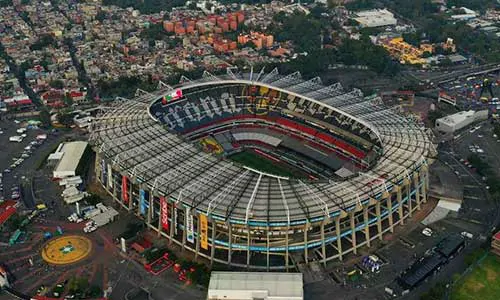
Mexico City Stadium (Estadio Azteca)
No stadium on earth can match the sheer history of Estadio Azteca. It has witnessed the legendary triumphs of Pelé in 1970 and Diego Maradona in 1986. Furthermore, Estadio Azteca will host the official opening match on June 11, 2026, officially kicking off this historic 48-team tournament. For soccer purists, visiting this majestic arena is a pilgrimage like no other.
Monterrey Stadium (Estadio BBVA)
Often referred to as “El Gigante de Acero” (The Steel Giant), Estadio BBVA is widely regarded as one of the most beautiful stadiums in North America. Nestled at the foot of the magnificent Cerro de la Silla mountain, it features a striking metallic exterior that blends into the surrounding landscape, offering fans spectacular views from their seats.
Guadalajara Stadium (Estadio Akron)
Located in Zapopan, Estadio Akron resembles a rising volcano topped by a white cloud-like roof. This design features grass-covered exterior slopes that seamlessly integrate the facility with the environment. It is the home of CD Guadalajara, one of Mexico’s most historically successful clubs, ensuring a passionate, festive atmosphere.
Canada Venues: Emerging Frontiers
While Canada has successfully hosted major international women’s soccer events, 2026 marks its first time co-hosting the men’s FIFA World Cup. Consequently, the selected Canadian cities have invested heavily in upgrading their facilities to meet strict international standards. The Canadian hosts are:
BC Place (Vancouver)
Located along the False Creek waterfront in Vancouver, BC Place features a state-of-the-art cable-supported retractable roof system. It has been a mainstay of Canadian sports, famously hosting the 2015 FIFA Women’s World Cup Final. Its upgraded playing surface and magnificent mountain backdrops make it a stunning location for tournament matches.
Toronto Stadium (BMO Field)
Situated in Exhibition Place, Toronto Stadium is a soccer-specific stadium that serves as the home of Toronto FC. To prepare for the tournament, the venue has undergone temporary seat expansion to increase its capacity to 45,000. This keeps the stadium’s intimate, energetic atmosphere while accommodating a much larger global audience.
These two cities bring a multicultural and welcoming atmosphere to the tournament, ensuring that visiting teams from all over the world will feel right at home as they compete on Canadian soil.
Technology and Pitch Transformations in the FIFA World Cup 2026 Venues: Iconic Stadiums Hosting the Tournament
Transitioning multi-use NFL and CFL stadiums into world-class soccer fields requires significant coordination. To meet strict requirements, organizers must address several technical challenges:
- Natural Grass Installation: Many modern American stadiums utilize synthetic turf fields. However, FIFA strictly mandates natural grass for all tournament matches. Consequently, venues like Atlanta, Dallas, and Seattle must install temporary natural turf systems equipped with advanced underground aeration and vacuum systems to keep the grass healthy.
- Pitch Dimension Adjustments: American football fields are narrower than standard soccer pitches. Therefore, several stadiums have undergone physical changes, including removing corner seats, to ensure the playing field meets the standard 105 x 68-meter FIFA requirements.
- Sustainable Operations: From LED light installations to comprehensive waste reduction initiatives, the FIFA World Cup 2026 Venues: Iconic Stadiums Hosting the Tournament are aiming to be the most environmentally friendly in history.
For more details on team updates, scheduling, and ticketing, you can visit the Official FIFA World Cup Website. Additionally, to learn more about the stadiums and their historic background, check out the Official FIFA Stadium Guide.
Frequently Asked Questions (FAQ)
To help you navigate the FIFA World Cup 2026 Venues: Iconic Stadiums Hosting the Tournament, we have compiled answers to the most common questions fans are asking:
Which stadium will host the 2026 World Cup Final?
The historic 2026 FIFA World Cup Final will take place at MetLife Stadium (officially designated as New York New Jersey Stadium) in East Rutherford, New Jersey, on July 19, 2026.
Where will the opening match of the tournament be played?
The opening match will be held on June 11, 2026, at the legendary Estadio Azteca (Mexico City Stadium) in Mexico City, Mexico.
How many total venues are hosting the 2026 tournament?
There are exactly 16 host stadiums spread across the three nations: 11 in the United States, 3 in Mexico, and 2 in Canada.
Are all stadiums using real, natural grass?
Yes. Even though several stadiums normally use artificial turf for their domestic league matches, all venues are installing high-quality natural grass fields specifically for the tournament.
What is the largest stadium by capacity?
Estadio Azteca in Mexico City features the highest tournament capacity at approximately 87,500 seats, followed closely by New York New Jersey Stadium at 82,500 seats.
Which stadium is hosting the most matches during the World Cup?
Dallas Stadium (AT&T Stadium) is scheduled to host nine matches during the tournament, the most of any individual venue.
Final Thoughts on the FIFA World Cup 2026 Venues: Iconic Stadiums Hosting the Tournament
The 2026 edition is set to be a true celebration of football across three countries. With its blend of historic venues like Estadio Azteca and futuristic stadiums like SoFi Stadium, the FIFA World Cup 2026 Venues: Iconic Stadiums Hosting the Tournament will offer a spectacular experience for players and fans alike. Each venue brings its own culture, design, and local history to the game, creating a uniquely memorable backdrop.
Are you planning to travel and watch a match in person? Let us know in the comments below which host city you are most excited to visit! Don’t forget to share this article with your fellow soccer fans as we prepare to witness soccer history unfold.