FIFA World Cup Host Selection Process: Evolution Through the Years
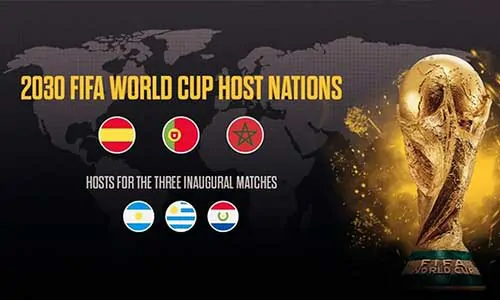
Table of Contents
- Introduction to the Evolution of World Cup Hosting
- The Early Days of the FIFA World Cup Host Selection Process
- The Era of Informal Rotation and Geopolitical Balance
- The Rise and Fall of Continental Rotation in the FIFA World Cup Host Selection Process
- The Double-Award Controversy and the Catalyst for Reform
- Modern Reforms and Transparency in the FIFA World Cup Host Selection Process
- Understanding the New FIFA World Cup Host Selection Process Criteria
- Historical Milestones of Host Selection (Summary Table)
- Conclusion: The Future of Global Sports Bidding
- Frequently Asked Questions (FAQ)
The beautiful game has always had a unique way of bringing the entire world together, but have you ever wondered how the stage for this global spectacle is actually set? The FIFA World Cup host selection process is a complex and highly fascinating system that has undergone dramatic shifts since the inaugural tournament in 1930. Originally decided in closed-room meetings with minimal documentation, the mechanism behind choosing host nations has evolved into a multi-billion-dollar bidding race governed by strict technical evaluations, transparency protocols, and global political diplomacy.
In the beginning, geographical convenience and administrative preferences dictated which country would welcome the world. However, as association football transformed into a massive commercial powerhouse, the stakes grew immensely. Consequently, the bidding process became a battleground of infrastructure, marketing potential, and geopolitical influence. By understanding this progression, fans and analysts alike can gain deep insights into how international sports governing bodies operate behind the scenes.
This comprehensive guide details the rich history and modern restructuring of how tournament venues are chosen. From early continental boycotts to the radical reforms implemented after the 2015 corruption scandals, we will explore how this legendary sporting event selects its ultimate destination.
The Early Days of the FIFA World Cup Host Selection Process
During the early 20th century, the FIFA World Cup host selection process was far less bureaucratic than it is today. When FIFA President Jules Rimet first conceptualized a global football championship in the late 1920s, finding countries willing to take on the financial risk was a major challenge. At the 1929 FIFA Congress, Uruguay was selected as the host of the inaugural 1930 tournament. This decision was largely made because Uruguay was the reigning double Olympic champion and offered to pay for all travel and accommodation expenses of the participating nations.
Despite this generous offer, the choice sparked immediate controversy. Because of the three-week boat journey required to cross the Atlantic Ocean in 1930, only four European nations chose to make the trip to South America. As a result, the tournament suffered from a lack of global representation, highlighting structural flaws in how hosting rights were assigned.
To balance the scales, the next two tournaments in 1934 and 1938 were both awarded to European nations, Italy and France respectively. This rapid succession of European hosts angered South American countries, who believed that the tournament would rotate strictly between the two dominant continents. Consequently, heavyweights like Argentina and Uruguay boycotted the 1938 tournament in protest, plunging the event into a deep diplomatic crisis. This early stage of the FIFA World Cup host selection process proved that geographical isolation and political disputes could easily derail the tournament’s integrity.
The Era of Informal Rotation and Geopolitical Balance
After the devastating hiatus caused by World War II, FIFA recognized that keeping peace among member nations was paramount. Therefore, the governing body introduced an informal pattern of alternating the host locations between Europe and the Americas. This compromise aimed to satisfy both hemispheres and prevent future damaging boycotts. For nearly half a century, this gentlemen’s agreement succeeded in maintaining competitive balance.
Specifically, the tournament went to Brazil in 1950, Switzerland in 1954, Sweden in 1958, and Chile in 1962. While this unofficial alternation kept most confederations happy, it also meant that nations from Africa, Asia, and Oceania were entirely excluded from hosting. During this period, the decision-making was also heavily consolidated. Instead of the entire FIFA Congress voting, the choice of host was delegated to the powerful FIFA Executive Committee (ExCo).
In addition, the reliance on an informal agreement occasionally created operational crises. For example, Colombia was originally selected to host the 1986 tournament. However, due to severe economic instability and infrastructure deficits, the Colombian government resigned from hosting in 1982. In response, FIFA quickly reorganized the bidding and awarded the tournament to Mexico, which became the first country to host the event twice. This sudden shift proved that the FIFA World Cup host selection process required a much more structured and legally binding framework.
The Rise and Fall of Continental Rotation in the FIFA World Cup Host Selection Process
As football experienced massive commercial expansion in the late 1990s, the battle to secure hosting rights reached unprecedented levels. The 2002 World Cup marked a major turning point when South Korea and Japan agreed to a historic co-hosting arrangement. Although the tournament was a spectacular success, the extreme logistical and political friction of dealing with two host nations led FIFA to temporarily ban joint bids.
Shortly after, in 2000, FIFA officially established the continental rotation policy. Under this new system, hosting duties would systematically rotate among the six continental confederations. By limiting the bidding pool to a single continent, FIFA hoped to guarantee that developing football regions would finally have their turn on the global stage.
How Continental Rotation Reshaped the FIFA World Cup Host Selection Process
Thanks to this policy, Africa welcomed its very first tournament when South Africa was selected to host the historic 2010 World Cup. Similarly, South America was designated as the target region for the 2014 tournament. While the system achieved its goal of global expansion, it quickly encountered critical flaws.
Because the 2014 bid was restricted exclusively to South America, only Brazil ended up submitting a complete bid. This lack of competition meant that Brazil faced almost no scrutiny during the bidding phase. Consequently, FIFA was left with very little leverage to demand ideal commercial or infrastructural conditions. Realizing that a single-candidate system was financially and strategically unsustainable, FIFA formally abandoned the continental rotation policy in late 2007.
The Double-Award Controversy and the Catalyst for Reform
Following the abolition of continental rotation, FIFA implemented a system where countries from the confederations that hosted the previous two tournaments were ineligible to apply. This ruleset opened up the field once more, leading to one of the most controversial moments in sports history: the double host selection of December 2, 2010.
On that single day, the 22-member FIFA Executive Committee (ExCo) held a simultaneous vote to select the hosts for both the 2018 and 2022 World Cups. This unprecedented dual-bidding window led to intense lobbying and geopolitical maneuvers. Ultimately, Russia was awarded the 2018 edition, while Qatar won the rights to the 2022 tournament, beating out highly favored bids from the United States, Australia, and Japan.
The selection of Qatar, a tiny desert nation with no football heritage and sweltering summer temperatures, triggered immediate skepticism and global outrage. Allegations of bribery, vote-buying, and backroom dealings began to dominate the headlines. An independent investigation, led by former US Attorney Michael Garcia, eventually uncovered systemic corruption within the ExCo. This crisis culminated in the dramatic 2015 Swiss police raids in Zurich, which led to the arrest of multiple top executives and the resignation of long-time FIFA President Sepp Blatter.
Modern Reforms and Transparency in the FIFA World Cup Host Selection Process
To rescue its shattered reputation, FIFA, under the new leadership of Gianni Infantino, promised to completely overhaul its operations. The old, highly secretive FIFA World Cup host selection process had to go. In its place, the organization introduced revolutionary changes designed to promote absolute transparency, democratic accountability, and technical excellence.
First and foremost, the power to select host nations was stripped from the small Executive Committee (which was restructured into the larger FIFA Council). Instead, the decision-making authority was given to the entire FIFA Congress, where all 211 member associations cast a vote. This major democratic shift ensured that no small group of individuals could easily manipulate the voting outcome.
Furthermore, to prevent secret block-voting and backroom lobbying, all votes cast during the Congress are made immediately public. The very first test of this reformed system occurred during the bidding for the 2026 World Cup. In an open and highly transparent vote, the joint “United Bid” of Canada, Mexico, and the United States comfortably defeated Morocco. This successful outcome proved that the modernized FIFA World Cup host selection process could deliver a fair, objective, and drama-free selection.
Understanding the New FIFA World Cup Host Selection Process Criteria
Beyond changing the voting body, FIFA also introduced a sophisticated, objective technical scoring system for bids. Under these new rules, prospective host nations must undergo a rigorous evaluation process carried out by an independent FIFA task force. Every bid is officially scored on a scale from 0 to 5 across key categories. If a bid fails to meet the minimum threshold, it is automatically eliminated before it can even reach the voting stage.
Currently, host nations must meet the following mandatory baseline requirements:
- Stadium Capacity: A minimum of 14 all-seater stadiums, with at least 7 being pre-existing structures. The opening match and final must be played in stadiums with a minimum capacity of 80,000.
- Infrastructure and Transport: High-speed transport networks connecting host cities, along with state-of-the-art training base camps and referee facilities.
- Human Rights: Comprehensive, legally binding assessments aligned with the United Nations Guiding Principles on Business and Human Rights.
- Financial Viability: Detailed economic projections showing profitability, sustainable stadium usage, and zero commercial exploitation.
These strict rules have drastically changed the bidding landscape. Consequently, the FIFA World Cup host selection process has increasingly favored joint multi-nation bids. This collaborative approach allows countries to share the immense economic and logistical burdens of hosting a modern 48-team tournament.
Indeed, this trend is perfectly illustrated by the recent appointments for future tournaments. The 2030 World Cup will feature a unique transcontinental hosting model across Morocco, Portugal, and Spain, with special centenary celebration matches hosted in Uruguay, Argentina, and Paraguay. Soon after, the 2034 tournament will head to Saudi Arabia, which emerged as the sole qualified bidder after a tightly scheduled and highly strategic selection timeline.
Historical Milestones of Host Selection
To help visualize how much the FIFA World Cup host selection process has shifted over the past century, the table below highlights the defining eras, voting bodies, and major controversies that transformed the system.
| Time Period | Voting Body | Key Selection Method | Major Controversies & Boycotts |
|---|---|---|---|
| 1930 – 1954 | FIFA Congress | Lobbying & financial incentives | 1938 European bias controversy and subsequent South American boycotts |
| 1958 – 1998 | Executive Committee (ExCo) | Informal continental rotation (Europe/Americas) | 1986 Colombia withdrawal due to financial problems |
| 2002 – 2014 | Executive Committee (ExCo) | Formalized rotation across 6 confederations | Controversial 2006 Germany vote; single-bidder issues for Brazil 2014 |
| 2018 – 2022 | Executive Committee (ExCo) | Simultaneous double-award system | Severe corruption scandals, FBI investigations, and 2015 Zurich arrests |
| 2026 – Present | FIFA Congress (All 211 nations) | Open public votes & strict technical task forces | Fast-tracked timelines, transcontinental joint bids |
Conclusion: The Future of Global Sports Bidding
In conclusion, analyzing the history of the FIFA World Cup host selection process reveals a mirror image of how professional football has matured over time. What began as a highly informal gathering of European and South American administrators has evolved into a globalized, highly scrutinized, and transparent democratic event. By shifting the final voting power to the entire 211-member congress and making the ballot records public, FIFA has taken critical steps toward eliminating backroom corruption.
However, as the commercial value of hosting the World Cup continues to soar, the integrity of the FIFA World Cup host selection process will remain a focal point of discussion. Maintaining a delicate balance between strict commercial demands, human rights standards, and sporting equality is no easy task. As we look forward to the innovative hosting formats of the 2026, 2030, and 2034 tournaments, the bidding process will undoubtedly continue to evolve, adapting to the modern economic and geopolitical realities of our times.
What is your take on World Cup joint hosting?
Do you prefer single-nation bids, or do you think massive joint transcontinental tournaments are the future of sports? We would love to hear your thoughts! Drop a comment below and share your opinion with our growing community of football enthusiasts.
Frequently Asked Questions (FAQ)
1. How did the FIFA World Cup host selection process work in the early years?
In the earliest days, the host country was chosen through voting at meetings of the FIFA Congress. The decisions were frequently informal and heavily influenced by travel convenience and financial incentives, such as Uruguay offering to cover all costs in 1930.
2. What is the continental rotation policy, and why was it abolished?
Introduced in 2000, the policy mandated that the World Cup rotate through different confederations to promote global equality. However, when Brazil was the sole bidder for the 2014 edition due to this restriction, FIFA realized that the lack of bidding competition was economically counterproductive and abolished it in 2007.
3. Who currently votes to select the FIFA World Cup host?
Under modern reforms, the final hosting decision is made by the entire FIFA Congress, consisting of all 211 member associations, rather than the small, exclusive Executive Committee.
4. Why did FIFA change the FIFA World Cup host selection process after 2015?
Following severe corruption allegations and FBI arrests surrounding the 2018 and 2022 dual-bidding decisions, FIFA underwent massive structural changes. The old secret executive vote was discarded in favor of public, democratic congressional voting to ensure maximum accountability.
5. What are the key infrastructure requirements for a prospective host?
Candidates must have at least 14 state-of-the-art, all-seater stadiums (with at least 7 already existing). Additionally, they must offer comprehensive transport systems, modern media centers, training base camps, and robust plans for protecting human rights.
6. Can multiple countries host the FIFA World Cup together?
Yes, joint bids are highly encouraged in the modern era. Following the 2026 tournament in North America and the 2030 tournament across Europe and Africa, joint bids allow multiple nations to share the economic and logistical costs of hosting.