FIFA World Cup Hosts After 2026: Future Tournaments and Candidate Nations
The global football stage is evolving at an unprecedented pace. The expansion to a 48-team tournament format, which begins in North America, has completely reshaped how the sports world views the logistics of international mega-events. As football enthusiasts look forward to the expansion of the tournament format, the landscape of FIFA World Cup Hosts After 2026 represents a fascinating shift in geography, diplomacy, and infrastructure. Over the coming decades, the tournament will visit multiple continents, testing the limits of international cooperation and modern stadium engineering.
To understand the choices for FIFA World Cup Hosts After 2026, one must first look at how FIFA has reimagined the bidding process to accommodate larger cohorts of teams and fans alike. Consequently, the bidding guidelines have been updated to evaluate not just athletic infrastructure, but also human rights, environmental sustainability, and commercial viability. This detailed analysis explores the confirmed hosts, the historical significance of upcoming tournaments, and the potential candidate nations preparing bids for future editions.
Table of Contents
- The Evolution of FIFA World Cup Hosts After 2026
- Logistical Challenges Faced by FIFA World Cup Hosts After 2026
- The Role of Confederation Rotation in Selecting FIFA World Cup Hosts After 2026
- The 2030 Centenary: A Unique Milestone for FIFA World Cup Hosts After 2026
- Saudi Arabia 2034: Redefining the Scale of FIFA World Cup Hosts After 2026
- Potential Candidates and Future FIFA World Cup Hosts After 2026
- Summary of Upcoming FIFA World Cup Host Formats
- Frequently Asked Questions
The Evolution of FIFA World Cup Hosts After 2026
In the past, hosting the World Cup was often a single-nation endeavor, with iconic tournaments hosted by countries like Brazil, Germany, and South Africa. However, the sheer scale of a 48-team tournament, featuring 104 matches instead of the traditional 64, makes single-nation hosting highly demanding. Therefore, joint bids spanning multiple nations and even continents are becoming the new norm for the global showpiece.
The transition is not merely logistical; it is deeply strategic. Joint hosting allows countries to share the immense financial burden of constructing world-class stadiums and upgrading municipal infrastructure. Furthermore, it spreads the environmental footprint, which is a key priority for FIFA’s sustainability goals. These changes have profoundly altered the criteria for evaluating potential hosts.
As we examine the trajectory of FIFA World Cup Hosts After 2026, we see a clear trend toward diversifying geographic representation. This ensures that the beautiful game continues to grow in emerging markets while utilizing the existing, top-tier infrastructure of established football nations.
Logistical Challenges Faced by FIFA World Cup Hosts After 2026
Managing a modern World Cup requires massive organizational capacity. Future hosts must guarantee at least 12 to 16 high-capacity stadiums, extensive transport networks, and thousands of hotel rooms. Additionally, they must ensure top-tier security for millions of international visitors traveling between host cities during the month-long tournament.
Consequently, many prospective candidate nations are forming regional alliances to present viable bids. Sharing matches across borders minimizes the risk of constructing “white elephant” stadiums—expensive venues that go unused after the tournament ends. This pragmatic approach is highly favored by FIFA in the modern era of event planning.
Another major challenge for FIFA World Cup Hosts After 2026 is managing varying legal, financial, and visa frameworks across co-hosting nations. Achieving seamless cross-border travel for fans and teams requires deep diplomatic coordination, which is a critical consideration for all future hosting committees.
The Role of Confederation Rotation in Selecting FIFA World Cup Hosts After 2026
To ensure fair global representation, FIFA historically utilized a confederation rotation policy. Under this system, member associations from confederations that hosted either of the past two tournaments are ineligible to bid for the subsequent edition. This rule heavily influences who can bid to become FIFA World Cup Hosts After 2026.
For example, because North America (CONCACAF) hosts the tournament in 2026, and the 2030 tournament involves Europe (UEFA), Africa (CAF), and South America (CONMEBOL), the bidding for 2034 was restricted exclusively to member associations from Asia (AFC) and Oceania (OFC). Consequently, this restriction paved the way for Saudi Arabia’s uncontested bid.
While the formal rotation policy has seen minor adjustments over the years to accommodate complex multi-continent bids, the underlying principle remains intact. This structured rotation ensures that football’s premier event continues to visit different corners of the globe, sparking developmental legacies in diverse regions.
The 2030 Centenary: A Unique Milestone for FIFA World Cup Hosts After 2026
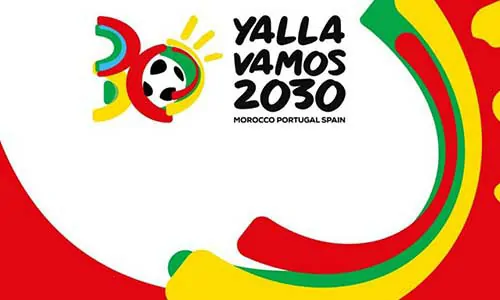
In December 2024, the Extraordinary FIFA Congress officially confirmed that the 2030 FIFA World Cup will feature a highly unconventional format to celebrate the tournament’s 100th anniversary . The primary tournament will be jointly hosted by Morocco, Portugal, and Spain . This marked a historic moment, as it is the first time a World Cup will be hosted across two distinct continents—Europe and Africa.
However, the celebration does not stop there. To honor the centenary of the very first World Cup played in Uruguay in 1930, three celebratory opening matches will be held in South America: Uruguay, Argentina, and Paraguay . Consequently, the 2030 edition will unite six countries and three continents in a celebration of football history.
This layout presents a unique milestone for FIFA World Cup Hosts After 2026. While the logistical demand of moving teams and fans across the Atlantic Ocean for the opening stages is significant, the historical symmetry of celebrating the inaugural tournament at the Estadio Centenario in Montevideo makes it a highly anticipated sporting event.
The infrastructure preparations for 2030 are already well underway. Spain and Portugal possess highly modern, club-level venues, including Madrid’s Santiago Bernabéu and Lisbon’s Estádio da Luz. Meanwhile, Morocco is constructing the spectacular Hassan II Stadium in Benslimane, near Casablanca, which is designed to hold over 115,000 spectators and potentially host the final match.
Saudi Arabia 2034: Redefining the Scale of FIFA World Cup Hosts After 2026
Following the 2030 multi-continental celebration, the 2034 edition of the FIFA World Cup is set to return to a single-nation hosting format. In late 2024, FIFA officially confirmed Saudi Arabia as the host nation for the 2034 tournament . It will be the first time a 48-team tournament is hosted in its entirety by a single country .
This selection represents a massive milestone for FIFA World Cup Hosts After 2026 in the Middle East. Saudi Arabia has proposed an extraordinarily ambitious tournament concept featuring 15 state-of-the-art stadiums spread across five host cities: Riyadh, Jeddah, Al Khobar, Abha, and the futuristic urban project of NEOM .
Among the proposed venues, the King Salman International Stadium in Riyadh is slated to serve as the crown jewel, hosting both the opening match and the grand final . Additionally, the Prince Mohammed bin Salman Stadium in Qiddiya features a futuristic, multi-functional design with a cliff-side view, showcasing how modern technology is reshaping venue architecture.
While the scale of Saudi Arabia’s developmental push is immense, the tournament is likely to be held during the winter months, similar to Qatar 2022, to avoid the intense summer heat . This shift in the traditional football calendar proves that future host nations are willing to adapt schedules to guarantee optimal playing conditions and player safety.
Potential Candidates and Future FIFA World Cup Hosts After 2026
With the 2030 and 2034 hosts officially confirmed, football analysts, federations, and sports betting platforms are already turning their attention to the 2038 tournament and beyond . Because the previous editions will have visited Europe, Africa, South America, and Asia, the field of potential candidates for 2038 is highly competitive.
Under traditional rotation logic, North America (CONCACAF) and Oceania (OFC) are theoretically positioned as strong contenders to bid . However, several other footballing powerhouses from across the globe have already expressed serious interest in joining the elite group of FIFA World Cup Hosts After 2026.
- Germany & Italy: The German Football Association (DFB) has reportedly begun studying the feasibility of a bid for either 2038 or 2042, aiming to deliver a highly sustainable tournament utilizing existing venues . Concurrently, reports suggest that Italy is also preparing a potential bid for 2038 to revitalize its domestic stadium infrastructure .
- China: As a major sporting superpower with vast financial resources and modern stadiums, China remains a strong solo candidate capable of hosting a 48-team tournament single-handedly .
- Australia & New Zealand: Following the immense success of the 2023 FIFA Women’s World Cup, a joint Oceanic-Asian bid involving Australia, New Zealand, and potentially a Southeast Asian nation (such as Indonesia) is highly attractive to organizers seeking to expand the game’s reach .
- Greece & Turkey: A joint cross-border bid between these two historic nations could serve as a powerful cultural and political bridge, showcasing the unifying power of sport .
Ultimately, the final decision for the 2038 edition will depend heavily on the shifting priorities of FIFA’s 211 member federations. Whether the tournament returns to a traditional European powerhouse or breaks new ground in Oceania, the process of selecting FIFA World Cup Hosts After 2026 will undoubtedly focus on commercial feasibility and world-class infrastructure.
Summary of Upcoming FIFA World Cup Host Formats
To provide a clear overview of the tournament’s evolution, the table below highlights the key differences in hosting formats, participating nations, and scheduling for the upcoming editions.
| Year | Host Nations | Confederations Involved | Number of Teams | Status |
|---|---|---|---|---|
| 2026 | United States, Canada, Mexico | CONCACAF | 48 | Confirmed |
| 2030 | Morocco, Portugal, Spain (Main Hosts) Uruguay, Argentina, Paraguay (Opening Matches) |
UEFA, CAF, CONMEBOL | 48 | Confirmed |
| 2034 | Saudi Arabia | AFC | 48 | Confirmed |
| 2038 | TBD (Germany, Italy, China, Australia-NZ among candidates) | TBD (CONCACAF & OFC favored by rotation) | 48 | Bidding Pending |
This structural overview highlights how hosting strategies have diversified. The transition from regional clusters to massive transcontinental alliances ensures that the tournament remains accessible and engaging for global fanbases.
Frequently Asked Questions
Q1: Who are the confirmed FIFA World Cup hosts after 2026?
A: The officially confirmed hosts are Morocco, Portugal, and Spain for the 2030 centenary tournament (with opening matches in Uruguay, Argentina, and Paraguay) , followed by Saudi Arabia as the host nation for the 2034 edition .
Q2: Why is the 2030 World Cup being hosted across three continents?
A: The unique multi-continental format is designed to celebrate the centenary of the very first World Cup, which took place in Uruguay in 1930 . Uruguay, Argentina, and Paraguay will each host one celebratory opening match before the main tournament moves to Morocco, Portugal, and Spain .
Q3: Will the 2034 World Cup in Saudi Arabia be played in summer or winter?
A: Due to the extreme summer temperatures in the Arabian Peninsula, the 2034 tournament is highly likely to be scheduled during the cooler winter months (typically November and December), similar to the schedule utilized for Qatar 2022 .
Q4: Can a single country still host a 48-team World Cup?
A: Yes, though it requires immense financial and physical infrastructure. Saudi Arabia’s 2034 campaign is set to be the first-ever 48-team tournament hosted entirely in a single country , supported by the construction of 8 brand-new stadiums and major municipal developments .
Q5: Which countries are expected to bid for the 2038 World Cup?
A: Early candidate nations and prospective joint bidders include Germany, Italy, China, and a potential Oceanic-Asian alliance featuring Australia and New Zealand . No formal bidding process has officially opened yet.
Q6: How does FIFA’s rotation policy affect future bidding eligibility?
A: To ensure broad global participation, FIFA’s current guidelines state that member associations from confederations that hosted the previous two World Cups cannot bid for the next tournament. This keeps the hosting cycle alternating across different continents.
Conclusion: The Global Tapestry of Future World Cups
The strategic planning of FIFA World Cup Hosts After 2026 reflects a deliberate effort to balance historical legacy with commercial viability and modernized infrastructure. By moving from regional blocks to transcontinental partnerships in 2030, and then showcasing single-nation capabilities in 2034, football’s governing body is charting a highly versatile path forward.
While the logistics of coordinating multi-nation tournaments present obvious challenges, they also offer unparalleled opportunities to unite diverse cultures through the love of football. As the bidding cycles for 2038 and 2042 begin to take shape, the global sporting community will continue to watch closely as new nations prepare to leave their mark on World Cup history.
What do you think of the future World Cup destinations?
Are you excited about the historic 3-continent layout of 2030, or do you prefer single-nation tournaments like Saudi Arabia 2034? We would love to hear your thoughts! Drop a comment below and join the discussion.