Football Formations Guide: From 4-4-2 to Today’s Tactical Systems
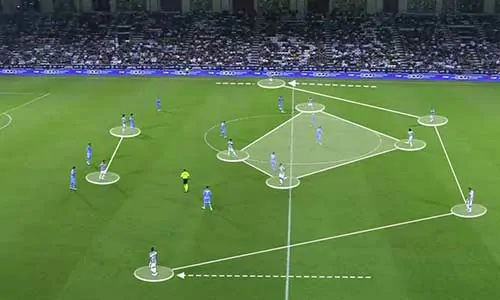
Table of Contents
- 1. Introduction to Modern Football Tactics
- 2. The Evolution of Football Formations
- 3. The Classic 4-4-2: The Foundation of Modern Structure
- 4. The Rise of the 4-3-3: Possession and High Pressing
- 5. The Flexible 4-2-3-1: The Creative Hub
- 6. Three-at-the-Back Systems: 3-5-2 and 3-4-3
- 7. Today’s Innovations: Inverted Fullbacks and Box Midfields
- 8. Formations Comparison Table
- 9. How Managers Choose the Right Tactical System
- 10. Conclusion & Tactical Takeaways
- 11. Frequently Asked Questions (FAQ)
1. Introduction to Modern Football Tactics
Football is a continuously evolving game where tactical innovation defines success on the pitch. Over the past few decades, managers have transitioned from using rigid positional structures to highly fluid, dynamic setups. Whether you are an aspiring coach, a tactical analyst, or a dedicated fan, understanding these systems is essential. This comprehensive Football Formations Guide: From 4-4-2 to Today’s Tactical Systems will walk you through the structural changes that have shaped modern football.
Historically, teams relied on simple, direct play styles that prioritized physical dominance. However, the modern game demands positional intelligence, rapid transitions, and technical versatility. Consequently, systems must adapt to exploit spaces while remaining defensively secure. In this Football Formations Guide: From 4-4-2 to Today’s Tactical Systems, we analyze how basic shapes transform into complex, fluid tactics during transitions.
By studying how structures evolve, we gain deep insights into why specific systems dominate certain eras. Therefore, let us look at how football moved away from rigid alignments to embrace the highly fluid setups we witness today in elite leagues.
2. The Evolution of Football Formations
The journey of football tactics is a fascinating tale of action and reaction. In the early days of the sport, teams regularly field highly attacking systems like the 2-3-5 pyramid. Over time, managers realized that defensive stability was crucial for consistent tournament victories. Consequently, the game evolved to balance defensive cover with offensive unpredictability.
During the mid-20th century, innovators introduced systems designed to control specific zones of the pitch. For example, the famous Catenaccio system focused on defensive solidity, while Total Football prioritized complete fluidity. As a result, players had to become comfortable operating in multiple positions. This constant shift laid the groundwork for the structural principles detailed in this Football Formations Guide: From 4-4-2 to Today’s Tactical Systems.
In modern leagues, the starting lineup on paper rarely matches the shape a team adopts on the pitch. Instead, teams transition between distinct defensive blocks and attacking overloads. Understanding this evolution helps us appreciate why certain traditional systems had to adapt to survive in the high-intensity environment of modern football.
3. The Classic 4-4-2: The Foundation of Modern Structure
For decades, the classic 4-4-2 was the undisputed king of football tactics, providing unmatched balance and pitch coverage. Specifically, the system utilizes two banks of four players, which minimizes gaps between the lines and offers natural width. Therefore, it became the go-to setup for legendary teams, including Sir Alex Ferguson’s Manchester United during their historic treble-winning campaign.
In this system, the relationship between the two strikers is incredibly vital. Traditionally, one forward acts as a target man, while the second striker plays in the pockets of space underneath. Moreover, the wingers are expected to deliver precise crosses while tracking back to support their fullbacks. This dual responsibility demands high levels of stamina and tactical discipline.
However, despite its historic success, the classic 4-4-2 eventually struggled against three-man midfields. Consequently, modern teams rarely use a rigid 4-4-2, opting instead to adapt its principles into more flexible variations. As highlighted in this Football Formations Guide: From 4-4-2 to Today’s Tactical Systems, the decline of the traditional 4-4-2 paved the way for midfield-dominant shapes.
4. The Rise of the 4-3-3: Possession and High Pressing
The rise of the 4-3-3 revolutionized how elite teams approach possession and territorial control. By utilizing three central midfielders, teams could easily create passing triangles, making it difficult for opponents to win the ball back. Pep Guardiola’s historic Barcelona side utilized this system to master “Tiki-Taka,” dominating opponents through short, rapid passing sequences.
Furthermore, the 4-3-3 is the perfect foundation for high-pressing strategies, such as Jürgen Klopp’s famous Gegenpressing. Because the three forwards stay high up the pitch, they can immediately pressure opposing defenders upon losing possession. Therefore, this formation is ideal for teams that want to win the ball back in high-value zones close to the opponent’s goal.
In this system, the defensive midfielder plays a pivotal role, anchoring the team while the other two central midfielders push forward. Additionally, the wingers in a 4-3-3 often cut inside, acting as inside forwards, which creates space for attacking fullbacks to overlap. Indeed, the 4-3-3 remains one of the most effective setups in our Football Formations Guide: From 4-4-2 to Today’s Tactical Systems.
5. The Flexible 4-2-3-1: The Creative Hub
During the late 2000s and early 2010s, the 4-2-3-1 emerged as the most popular tactical system globally. This setup offers a perfect compromise between defensive security and attacking creativity. By utilizing two defensive midfielders, coaches can shield their backline while giving the front four complete freedom to attack.
Specifically, the central attacking midfielder (the “number 10”) serves as the primary creative playmaker. This player operates in the vital space between the opponent’s midfield and defense, picking out key passes for the striker. Meanwhile, the two defensive midfielders—often referred to as the “double pivot”—provide the defensive screen required to stop counterattacks.
Consequently, teams using the 4-2-3-1 can easily transition into a 4-4-2 when defending, dropping their attacking midfielder into the midfield line. This high level of defensive adaptability makes the 4-2-3-1 a key inclusion in any comprehensive Football Formations Guide: From 4-4-2 to Today’s Tactical Systems. For a deeper look at tactical variations, you can explore the analytical breakdowns on The Coaches’ Voice.
6. Three-at-the-Back Systems: 3-5-2 and 3-4-3
In recent years, three-at-the-back formations have experienced a massive resurgence in elite European football. Historically associated with defensive, counter-attacking setups, modern 3-5-2 and 3-4-3 structures are now highly offensive weapons. This shift is primarily due to the evolution of the wingback position.
Wingbacks in these systems must cover the entire length of the pitch, acting as defenders when out of possession and wingers when attacking. Therefore, they must possess exceptional athletic ability and tactical awareness. When executed correctly, these systems allow teams to dominate the wide areas and create numeric overloads in midfield.
Additionally, the three central defenders provide a solid foundation for building play safely from the back. Consequently, teams can easily bypass aggressive high presses by circulating the ball through their central defenders. As modern tactics show, the 3-5-2 and 3-4-3 systems are essential chapters in our Football Formations Guide: From 4-4-2 to Today’s Tactical Systems.
7. Today’s Innovations: Inverted Fullbacks and Box Midfields
The modern game is no longer defined by static, pre-determined shapes on a tactics board. Instead, managers like Pep Guardiola and Mikel Arteta have introduced highly fluid systems that change completely depending on who has the ball. One of the most significant innovations is the use of inverted fullbacks.
Instead of staying wide, an inverted fullback drifts into central midfield when their team has possession. This movement creates a “box midfield” (often a 3-2-4-1 or 3-2-2-3 shape), giving the team numerical superiority in the center of the pitch. Consequently, this prevents the opposition from easily launching central counterattacks.
Furthermore, this tactical shift allows creative central midfielders to push higher into the half-spaces, creating direct passing channels to the forwards. Understanding these fluid movements is crucial for mastering any modern Football Formations Guide: From 4-4-2 to Today’s Tactical Systems. For additional match analysis and tactical trends, visit The Athletic.
8. Formations Comparison Table
To help you compare these systems easily, the table below outlines the core strengths, weaknesses, and primary focus of the most popular formations in modern football.
| Formation | Key Strength | Main Weakness | Tactical Focus |
|---|---|---|---|
| 4-4-2 | Excellent pitch coverage & structural balance | Can be easily overrun in central midfield | Direct play & disciplined defensive blocks |
| 4-3-3 | Superior possession control & high pressing | Leaves space behind fullbacks during attacks | Positional play & aggressive counter-pressing |
| 4-2-3-1 | Great midfield flexibility & creative freedom | Striker can become isolated without support | Balanced defending & playmaker-driven attacks |
| 3-5-2 | Overloads central areas & wide pitch coverage | Physically demanding on wingbacks | Controlled possession & wingback-driven width |
9. How Managers Choose the Right Tactical System
Selecting the ideal formation is not just about choosing a favorite system. Instead, elite managers must carefully evaluate their squad’s specific technical strengths and athletic limitations. Consequently, a manager must adapt their preferred tactical philosophy to fit the players at their disposal.
Specifically, if a squad lacks fast, dynamic wingers but features highly intelligent central midfielders, a coach may avoid the 4-3-3. Instead, they might implement a narrow diamond midfield or a 3-5-2 system to dominate the center of the pitch. Therefore, flexibility is key to ensuring consistent results throughout a grueling season.
Moreover, modern managers must prepare detailed tactical gameplans to counter their opponent’s unique strengths. As highlighted in this Football Formations Guide: From 4-4-2 to Today’s Tactical Systems, the ability to modify shapes mid-game is what separates elite tactical masterminds from average coaches.
10. Conclusion & Tactical Takeaways
Ultimately, football tactics have evolved from rigid, predictable alignments to highly fluid and dynamic systems. While the classic 4-4-2 served as the tactical foundation for generations, modern coaches have adapted its core principles to create incredibly sophisticated setups. Today’s football demands complete positional versatility, making fluid shapes like the box midfield highly effective.
As we have explored in this Football Formations Guide: From 4-4-2 to Today’s Tactical Systems, there is no single “perfect” formation. Each system comes with its own set of advantages and vulnerabilities. The most successful teams are those that can transition smoothly between defensive and attacking shapes while keeping complete control of the pitch.
What is your favorite tactical formation to watch or coach? Let us know in the comments section below, and share this guide with your fellow football fans to keep the tactical discussion going!
11. Frequently Asked Questions (FAQ)
Q1: Why did the classic 4-4-2 formation decline in popularity?
A: The classic 4-4-2 fell out of favor primarily because it was easily overrun in midfield by teams playing with three central midfielders, such as in a 4-3-3. Having an extra midfielder allowed opponents to dominate possession and control the tempo of the game.
Q2: What is the main role of an inverted fullback in modern systems?
A: An inverted fullback moves into the central midfield during possession phases. This movement creates a numerical overload in the center of the pitch, helps control the tempo of the game, and offers better protection against counterattacks.
Q3: How does a 3-5-2 differ from a traditional 5-3-2 defensively?
A: While the player personnel can be similar, the difference lies in their intent. A 3-5-2 is highly proactive, with wingbacks pushed high up the pitch to press and create width. In contrast, a 5-3-2 is generally more defensive, focusing on maintaining a low, compact defensive block.
Q4: Is the 4-2-3-1 still used in elite modern football?
A: Yes, the 4-2-3-1 remains widely popular because of its incredible flexibility. It allows teams to defend in a compact 4-4-2 shape while attacking with a highly fluid front four, making it difficult for opponents to defend against transitions.
Q5: What does the term “half-space” mean in football tactics?
A: The half-space is the vertical corridor on the pitch located between the central zone and the wide flanks. Modern attacking players heavily target these spaces because they offer ideal angles for creative passes and direct shots on goal.
Q6: Why is Pep Guardiola’s 3-2-4-1 system so effective?
A: This system utilizes a box midfield that guarantees central passing superiority. It allows five players to occupy the key attacking zones while maintaining a rock-solid rest defense of five players to stop any immediate counterattacks.