Football Position Numbers Explained: The Meaning of 1 to 11
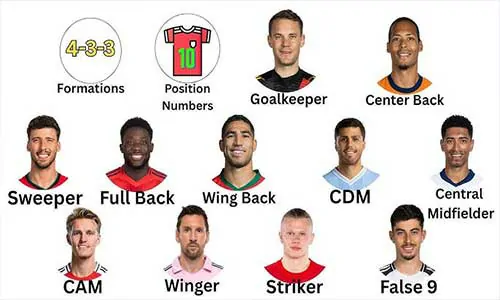
Table of Contents
- Introduction to Jersey Numbers in Football
- The Historical Origins of Football Position Numbers
- Football Position Numbers Explained: The Meaning of 1 to 11
- Number 1: The Goalkeeper
- Number 2: The Right-Back
- Number 3: The Left-Back
- Number 4: The Center-Back / Defensive Midfielder
- Number 5: The Center-Back (The Defensive Anchor)
- Number 6: The Central Defensive Midfielder (The Pivot)
- Number 7: The Winger / Second Striker
- Number 8: The Box-to-Box Midfielder
- Number 9: The Center-Forward / Striker
- Number 10: The Attacking Midfielder / Playmaker
- Number 11: The Left Winger
- How Modern Tactics Changed Traditional Roles
- Quick Reference Guide: Football Position Numbers
- Conclusion and Final Thoughts
- Frequently Asked Questions (FAQs)
Introduction to Jersey Numbers in Football
Every weekend, millions of fans worldwide tune in to watch their favorite football clubs battle on the pitch. While we easily recognize players by their names, the digits printed on their backs carry a much deeper tactical narrative. In this comprehensive guide, we provide a detailed Football Position Numbers Explained: The Meaning of 1 to 11 breakdown to help you decode the rich history and strategic functions of each traditional jersey number.
Originally designed for simple identification, these numbers evolved into tactical shorthand. Consequently, when a manager talks about wanting a “classic number 9” or a “dynamic number 8,” they are not just discussing a shirt. Instead, they are describing a highly specific profile, set of responsibilities, and style of play. Understanding these designations can transform how you view and analyze matches.
Therefore, whether you are a seasoned tactical analyst or a newcomer to the beautiful game, mastering this numbering system is essential. Let us embark on this journey through football history to discover how eleven simple numbers define the structure of modern tactics.
The Historical Origins of Football Position Numbers
To fully appreciate the numbering system, we must first look back to its inception. Squad numbering made its prominent debut in the English Football League in 1928, specifically during matches involving Chelsea and Arsenal. Initially, the concept was straightforward: players were numbered from 1 to 11 based on their starting positions in the popular 2-3-5 formation, also known as the “Pyramid” system.
Under this classic setup, the numbering began at the goalkeeper and moved systematically through the defensive line, midfield, and forward lines from right to left. Furthermore, as tactical structures evolved into the WM formation and eventually the modern 4-4-2, these numbers remained deeply associated with specific zones on the pitch. Although squad numbers have become highly personalized in the modern era, the tactical identity of numbers 1 through 11 remains highly influential.
Football Position Numbers Explained: The Meaning of 1 to 11
Let us dive deep into the heart of the pitch. By analyzing each position individually, we can uncover how these traditional roles dictate a team’s offensive and defensive structures.
Number 1: The Goalkeeper
The number 1 jersey is reserved almost exclusively for the starting goalkeeper. As the final line of defense, this player’s primary responsibility is to prevent the opposition from scoring. Traditionally, a goalkeeper’s job was confined to shot-stopping, claiming crosses, and clearing the ball downfield.
However, the modern era has revolutionized the demands of this position. Today, managers expect goalkeepers to act as “sweeper-keepers.” This means they must be comfortable with the ball at their feet, participating in building up play from the back. Consequently, their passing range has become almost as critical as their reflex saves.
- Primary Zone: Penalty Area / Goal Line
- Key Attributes: Reflexes, communication, aerial authority, distribution
- Iconic Examples: Manuel Neuer, Gianluigi Buffon, Iker Casillas
Number 2: The Right-Back
In the traditional numbering scheme, the number 2 is assigned to the right-back. Situated on the right side of the defensive line, this player is tasked with shutting down opposing wingers and protecting the flank. Defensively, they must possess excellent 1v1 tackling skills and spatial awareness.
In addition to their defensive duties, modern right-backs are highly active in the attacking phase. They are expected to make overlapping runs, deliver precise crosses into the penalty box, and sometimes even invert into the midfield to help control possession. As a result, stamina and technical ability are paramount for this role.
- Primary Zone: Right defensive flank and touchline
- Key Attributes: Stamina, tackling, crossing, positional discipline
- Iconic Examples: Cafu, Gary Neville, Dani Alves
Number 3: The Left-Back
Mirroring the right-back, the number 3 is traditionally worn by the starting left-back. This player is responsible for patrolling the left side of the pitch, combining robust defensive cover with dynamic attacking contributions. Because left-footed players are relatively rare, a high-quality natural left-back is a prized asset for any squad.
Furthermore, the modern evolution of the sport has turned many left-backs into virtual wingers during offensive transitions. They must constantly transition between tracking back to defend and sprinting forward to support the attack, demanding an elite level of physical conditioning.
- Primary Zone: Left defensive flank and touchline
- Key Attributes: Acceleration, tackling, crossing accuracy, tactical intelligence
- Iconic Examples: Paolo Maldini, Roberto Carlos, Ashley Cole
Number 4: The Center-Back / Defensive Midfielder
The interpretation of the number 4 jersey varies slightly depending on regional footballing cultures. In British football, the number 4 has traditionally been worn by a rugged, dominant central defender. Conversely, in continental Europe and South America, it is often associated with a deep-lying defensive midfielder who screens the backline.
Regardless of the exact position, the core essence of a number 4 involves defensive security and structural organization. When deployed as a center-back, this player must excel at aerial duels, physical confrontations, and stepping forward to intercept loose balls.
- Primary Zone: Central defensive area / Deep midfield
- Key Attributes: Physical strength, heading, intercepting, leadership
- Iconic Examples: Virgil van Dijk, Patrick Vieira, Sergio Ramos
Number 5: The Center-Back (The Defensive Anchor)
The number 5 is universally recognized as the badge of the commanding center-back. This player typically serves as the anchor of the defense, organizing the defensive line and ensuring structural cohesion. Unlike the more aggressive center-back partners who might step out to challenge attackers, the number 5 often reads the game from a slightly deeper position.
In the contemporary game, a number 5 must also be highly proficient on the ball. Rather than simply clearing danger, they are expected to initiate attacks with composed short passes or accurate long diagonals to the wingers.
- Primary Zone: Central defense
- Key Attributes: Tactical reading, aerial dominance, precise passing, composure
- Iconic Examples: Franz Beckenbauer, Carles Puyol, Fabio Cannavaro
Number 6: The Central Defensive Midfielder (The Pivot)
Often referred to as the “pivot” or “holding midfielder,” the player wearing the number 6 acts as the crucial link between defense and attack. Positioned just in front of the center-backs, their primary objective is to break up opposition counter-attacks and recycle possession cleanly.
Moreover, the number 6 dictates the tempo of the entire match. They receive the ball under intense pressure, turn, and distribute it to more advanced creative players. Consequently, exceptional positional awareness and a calm demeanor under pressure are absolute requirements for this demanding role.
- Primary Zone: Defensive midfield
- Key Attributes: Positional awareness, short passing, intercepting, high press resistance
- Iconic Examples: Sergio Busquets, Rodri, Claude Makélélé
Number 7: The Winger / Second Striker
The number 7 is arguably one of the most prestigious and glamorous jerseys in football history. Traditionally worn by the right winger, this role is designed for players who possess explosive pace, dazzling dribbling skills, and the ability to create goal-scoring opportunities out of nothing.
However, the modern number 7 is often more than just a touchline hugger. Many modern wingers cut inside to shoot on their stronger foot, acting as inside forwards or second strikers. Because of this dual threat, they frequently rank among the team’s top goalscorers and assist makers.
- Primary Zone: Right wing / Attacking third
- Key Attributes: Dribbling, speed, crossing, finishing
- Iconic Examples: Cristiano Ronaldo, David Beckham, George Best
Number 8: The Box-to-Box Midfielder
The number 8 jersey represents the engine room of the team. As a classic box-to-box midfielder, this player is expected to influence the match in both penalty areas. They must assist the defensive midfielder in winning back possession, while also making surging runs into the opponent’s box to score goals.
Therefore, a great number 8 requires an extraordinary combination of physical stamina, tactical versatility, and technical skill. They are the ultimate all-rounders, capable of tackling, passing, and shooting with equal proficiency.
- Primary Zone: Central midfield (box-to-box)
- Key Attributes: Work rate, shooting from distance, vision, tackling
- Iconic Examples: Steven Gerrard, Andrés Iniesta, Frank Lampard
Number 9: The Center-Forward / Striker
In any discussion of football position numbers explained: the meaning of 1 to 11, the number 9 holds a special place. This jersey belongs to the primary striker—the focal point of the team’s attack. The main objective of a number 9 is simple: put the ball in the back of the net.
Whether they are a physical target man who excels at holding up play or a lightning-fast predator who exploits space behind the defense, the number 9 must possess elite movement and finishing. They must be clinical inside the box, converting half-chances into match-winning goals.
- Primary Zone: Opponent’s penalty box
- Key Attributes: Finishing, positioning, heading, physical strength
- Iconic Examples: Ronaldo Nazário, Robert Lewandowski, Erling Haaland
Number 10: The Attacking Midfielder / Playmaker
The number 10 jersey is synonymous with magic, creativity, and genius. Traditionally worn by the advanced playmaker or “trequartista,” this player operates in the pockets of space between the opponent’s midfield and defensive lines. Their primary responsibility is to unlock stubborn defenses with defense-splitting passes.
In addition to their visionary passing, the number 10 is usually highly skilled in dribbling and possesses excellent shooting ability. They are the creative heartbeats of their teams, often granted tactical freedom to roam and dictate the attacking flow.
- Primary Zone: Attacking midfield (the “hole”)
- Key Attributes: Vision, dribbling, passing accuracy, creativity
- Iconic Examples: Diego Maradona, Lionel Messi, Zinedine Zidane
Number 11: The Left Winger
Rounding out the traditional lineup is the number 11, typically assigned to the left winger. Traditionally, this role was occupied by a fast, left-footed player who stayed close to the touchline, beat their fullback, and whipped crosses into the box for the number 9.
In modern tactical setups, however, many left wingers are right-footed “inverted wingers.” This allows them to cut inside onto their stronger foot to shoot or combine with the attacking midfielder, creating dynamic overlapping opportunities for the left-back.
- Primary Zone: Left wing / Attacking third
- Key Attributes: Speed, 1v1 dribbling, crossing, curling shots
- Iconic Examples: Ryan Giggs, Ronaldinho, Neymar Jr.
How Football Position Numbers Explained: The Meaning of 1 to 11 Has Changed
While the traditional numbering system provides an excellent foundation, modern tactics have introduced fascinating variations. For instance, the rise of the “False Nine” has seen players wearing the number 9 drop deep into midfield to create space, completely defying the traditional target-man role. Similarly, modern tactical setups frequently feature fluid rotations where players switch positions dynamically during a match.
Consequently, analyzing a player’s role requires looking beyond the physical number on their back. It is vital to observe how they occupy space and interact with their teammates. Nonetheless, the classic 1 to 11 framework remains the standard vocabulary used by coaches, commentators, and fans to describe tactical structures.
Quick Reference Guide: Football Position Numbers Explained: The Meaning of 1 to 11
To help you quickly visualize and remember these roles, we have compiled a summary table detailing each position’s traditional name, zone, and primary objective on the pitch.
| Number | Traditional Position | Key Tactical Focus | Famous Tactical Archetype |
|---|---|---|---|
| 1 | Goalkeeper | Shot-stopping and initiating build-up | The Sweeper-Keeper |
| 2 | Right-Back | Flank defense and overlapping runs | The Attacking Full-Back |
| 3 | Left-Back | Flank defense and wide attacking support | The Wing-Back |
| 4 | Center-Back | Physical defending and aerial duels | The Stopper |
| 5 | Center-Back | Positional defense and play distribution | The Ball-Playing Defender |
| 6 | Defensive Midfielder | Screening defense and recycling possession | The Deep-Lying Pivot |
| 7 | Right Winger | Dribbling, crossing, and scoring from out wide | The Inside Forward |
| 8 | Central Midfielder | Transitioning play and box-to-box runs | The Mezzala / Box-to-Box |
| 9 | Striker | Goal scoring and focal point of attack | The Target Man / Poacher |
| 10 | Attacking Midfielder | Creating chances and finding space | The Classic Playmaker |
| 11 | Left Winger | Speed, crossing, and creating width | The Traditional Winger |
Conclusion and Final Thoughts
To sum up, while modern squad numbers often range from 1 to 99, the classic 1 to 11 system remains the tactical blueprint of football. Each digit tells a story of tactical innovation, defining the specialized roles that players must master to ensure their team’s success on the pitch.
By understanding these historical and modern contexts, you can look beyond the surface of a match and appreciate the complex strategic chess game unfolding before your eyes. The next time you watch a game, pay close attention to how your team’s players interpret their assigned roles.
For more detailed insights on official rules and tactical histories, you can check the regulations on the FIFA Official Website or read about modern league structures on the Premier League Official Website.
What is your favorite football position?
Do you prefer the creative elegance of a classic number 10, or the tireless, combative work rate of a number 8? Let us know in the comments below, and don’t forget to share this article with your fellow football fans!
Frequently Asked Questions (FAQs)
1. Why are football numbers from 1 to 11 so significant?
These numbers represent the traditional starting lineup in football’s early tactical systems. Although modern squads use arbitrary numbers, 1 to 11 still refer to specific roles on the pitch, such as the striker (9) or playmaker (10).
2. What is the difference between a number 6 and a number 8?
A number 6 is a defensive or holding midfielder whose primary role is to protect the defense and recycle possession. A number 8 is a box-to-box midfielder who transitions between defensive duties and joining the attack in the opposing box.
3. Can any player wear any number today?
Yes, in modern professional club football, players are generally allowed to choose any squad number from 1 to 99, subject to league registration rules. However, in some international tournaments, squads must be numbered strictly from 1 to 23 or 26.
4. What does the term “False Nine” mean?
A “False Nine” is a player who starts in the traditional striker position (number 9) but drops deep into midfield during possession. This movement pulls opposing center-backs out of position and creates space for wingers to run into.
5. Why is the number 10 considered the most prestigious jersey?
The number 10 jersey has historically been worn by the team’s primary playmaker and most creative player. Legendary icons like Pele, Diego Maradona, and Lionel Messi have cemented its reputation as the symbol of footballing genius.
6. How does an inverted winger differ from a traditional number 11?
A traditional number 11 winger plays on the side of their dominant foot to cross the ball. An inverted winger plays on the opposite side (e.g., a right-footed player on the left wing) so they can cut inside to shoot or pass.