Football Yellow and Red Cards Explained: Rules, Suspensions and History
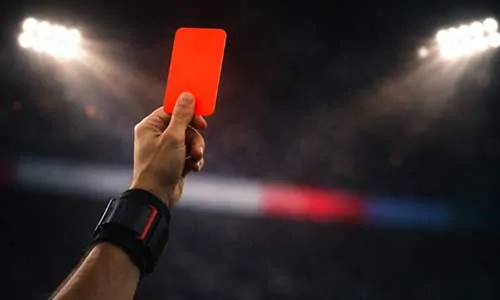
Football is a game of high passion, quick decisions, and intense physical encounters. To maintain order and ensure fair play, governing bodies have established strict disciplinary measures. In this comprehensive guide, we provide everything you need to know about Football Yellow and Red Cards Explained: Rules, Suspensions and History. Whether you are a casual fan, an aspiring referee, or a seasoned player, understanding these mechanics is vital. Let’s dive deep into the world of soccer bookings.
Table of Contents
The Evolution of Discipline: Football Yellow and Red Cards Explained: Rules, Suspensions and History
Before the introduction of colored cards, football referees relied entirely on verbal warnings and physical gestures to discipline players. Consequently, this system often led to severe confusion, particularly in international matches where language barriers prevented effective communication. A prime example of this occurred during the infamous 1966 World Cup quarter-final match between England and Argentina.
During that match, Argentine captain Antonio Rattín was sent off by German referee Rudolf Kreitlein. However, Rattín did not understand the verbal order and refused to leave the pitch for several minutes. Furthermore, English players Jack and Bobby Charlton only discovered they had been cautioned after reading the morning newspapers. This communication breakdown highlighted an urgent need for a universal, visual disciplinary system.
To resolve this issue, English referee Ken Aston proposed a brilliant solution inspired by everyday traffic lights. He realized that a yellow card could represent a caution (slow down/take care), while a red card would signify a dismissal (stop/leave the field). As a result, FIFA officially introduced yellow and red cards at the 1970 World Cup in Mexico.
Crucially, the new system was an instant success. The very first yellow card in World Cup history was shown to Soviet Union midfielder Evgeny Lovchev during the opening match against Mexico. Since then, the colored card system has become a fundamental element of global sports, ensuring clarity for players, coaches, and spectators alike.
Yellow Card Rules and Cautionable Offenses
A yellow card serves as a formal warning to a player, indicating that they have committed a serious infraction. According to Law 12 of the International Football Association Board (IFAB) Laws of the Game, a referee can caution a player for several distinct offenses.
Firstly, unsporting behavior is the most common reason for a yellow card. This category includes reckless tackles, holding an opponent’s shirt, or simulating an injury to deceive the referee (diving). In addition, celebrating a goal by removing one’s shirt or climbing onto peripheral fences is also classified as unsporting behavior.
Secondly, dissent by word or action is strictly penalized. Players who loudly argue with officials or use sarcastic gestures run a high risk of being booked. To minimize this, modern rules mandate that only the team captain may approach the referee to discuss decisions in key matches.
Thirdly, persistent offenses can trigger a caution. Even if individual fouls are minor, a player who repeatedly breaks the rules will eventually receive a yellow card. Referees track these occurrences carefully to protect the flow of the game.
Other common cautionable offenses include:
- Delaying the restart of play: Kicking the ball away, taking too long to throw in, or wasting time during goal kicks.
- Failure to respect the required distance: Failing to stand the mandatory 10 yards away during a free kick or corner.
- Entering or leaving the field without permission: Stepping onto or off the pitch without the referee’s explicit consent.
Red Card Rules and Sending-Off Offenses
In contrast to a yellow card, a red card represents the ultimate on-field punishment. When a referee shows a red card, the offending player is immediately dismissed from the pitch and must leave the technical area entirely. Crucially, the penalized team is not allowed to substitute the dismissed player, forcing them to play the remainder of the match with ten men.
A red card can be shown in two ways: either directly (a straight red card) for an extreme offense, or indirectly as a consequence of receiving two yellow cards in a single match. Therefore, a player must maintain discipline even after an initial caution.
According to official regulations, straight red cards are reserved for the following serious offenses:
- Serious foul play: A tackle or challenge that endangers the safety of an opponent or uses excessive force and brutality.
- Violent conduct: Actively striking, punching, headbutting, or attempting to physically harm an opponent, teammate, or official.
- Spitting or biting: Any disgusting act of spitting or biting directed at any person on the pitch.
- Denying an obvious goal-scoring opportunity (DOGSO): Intentionally stopping an opponent’s clear path to goal through a foul or deliberate handball.
- Using offensive, insulting, or abusive language: Directing highly inappropriate verbal abuse toward anyone in the stadium.
Notably, the “Double Jeopardy” rule was modified by the IFAB in recent years. Previously, if a player committed a DOGSO offense inside the penalty area, they faced a “triple punishment”: a penalty kick, a red card, and a subsequent suspension. Currently, if the player makes a genuine attempt to play the ball, the red card is downgraded to a yellow card, although the penalty is still awarded.
Navigating Penalty Bans: Football Yellow and Red Cards Explained: Rules, Suspensions and History
The consequences of receiving cards extend far beyond the final whistle of a single match. Governing bodies across different leagues implement strict suspension systems to deter rough play. Consequently, accumulating cards leads to automatic match bans.
For instance, in domestic leagues like the English Premier League or Spain’s La Liga, accumulating five yellow cards within the first half of the season results in an automatic one-match ban. However, if a player reaches ten yellow cards later in the season, they face a harsher two-match suspension.
To illustrate how these suspension frameworks function, let’s examine the disciplinary rules across prominent football competitions in the table below:
| Competition | Yellow Card Limit (Ban) | Straight Red Suspension | Card Wipe Rule |
|---|---|---|---|
| Premier League | 5 Yellows (1 match) / 10 Yellows (2 matches) | 3 matches (for violent conduct) | Cleared after Gameweeks 19 and 32 |
| UEFA Champions League | 3 Yellows (1 match) | 1 match (can be increased by UEFA) | Cleared after the Quarter-Finals |
| FIFA World Cup | 2 Yellows (1 match) | 1 match (minimum) | Cleared after the Quarter-Finals |
Furthermore, straight red cards shown for violent conduct almost universally carry a three-match suspension. On the other hand, a red card received for a professional foul or a second yellow card typically results in a one-match suspension. Managing these thresholds is a critical task for coaching staffs during a long campaign.
Strategic Shifts: Football Yellow and Red Cards Explained: Rules, Suspensions and History
When a referee pulls a card from their pocket, it does not just penalize a single player—it fundamentally alters the tactical dynamic of the entire match. Understanding the tactical shifts linked to Football Yellow and Red Cards Explained: Rules, Suspensions and History helps fans appreciate the strategic depth of the sport.
When a key player receives an early yellow card, they must immediately adjust their defensive approach. Specifically, they can no longer commit to aggressive or risky tackles, as another mistake could result in a red card. Opposing managers often exploit this vulnerability by instructing their wingers to directly run at the cautioned defender to force a second booking.
Meanwhile, receiving a red card triggers a tactical emergency. Managers must quickly decide whether to sacrifice an attacking player to bring on a defender, often transitioning to a defensive “low block.” This survival strategy, colloquially known as “parking the bus,” aims to preserve a draw or protect a narrow lead despite the numerical disadvantage.
Ultimately, discipline is just as critical to winning trophies as tactical shape or individual skill. Teams that minimize their card count conserve valuable physical energy and avoid devastating suspensions to key players during crucial phases of the season.
Frequently Asked Questions
Can football managers and coaching staff receive yellow and red cards?
Yes. Since the IFAB updated the Laws of the Game ahead of the 2018/19 season, referees can formally caution or dismiss team officials in the technical area. If an assistant coach or manager behaves aggressively, they will receive a yellow or red card just like active players on the pitch.
What is the “Double Jeopardy” rule in football?
The double jeopardy rule prevents a player from receiving a red card and conceding a penalty kick for a challenge inside the box, provided they made a genuine attempt to play the ball. In such cases, the referee awards the penalty but only issues a yellow card instead of a straight red card.
Do yellow cards carry over into a penalty shootout?
No, they do not. According to IFAB rules, yellow cards issued during normal time and extra time are wiped before a penalty shootout begins. Therefore, if a player with an active yellow card receives another caution during the shootout, they are not sent off.
Who has received the fastest red card in football history?
The fastest red card on record belongs to amateur player Lee Todd, who was sent off just two seconds into a match in 2000. Upon hearing the referee blow the starting whistle right next to his ear, Todd muttered, “Fuck me, that was loud,” resulting in an immediate dismissal for abusive language.
Are yellow and red cards wiped before a World Cup final?
Yes. To ensure that star players do not miss the prestigious World Cup final due to minor accumulations, FIFA wipes single yellow cards after the quarter-final round. Consequently, a player can only miss the final if they receive a red card during the semi-final match.
Can a referee show a card after the final whistle has blown?
Yes. The referee’s authority begins the moment they enter the field for pre-match inspection and does not end until they leave the pitch after the final whistle. As a result, players can still be booked or sent off for post-match altercations or dissent while exiting the field.
Conclusion & Final Thoughts
In conclusion, the system of yellow and red cards has successfully transformed football into a safer, fairer, and more globally accessible sport. From its humble origins inspired by traffic lights to modern applications managed via VAR (Video Assistant Referee), this visual language of discipline is absolutely central to the game.
Maintaining strong discipline prevents tactical breakdowns, secures vital points, and keeps key players eligible for championship matches. For more detailed insights into official football regulations, you can read the complete guidelines directly on the official FIFA Web Portal.
What is your opinion on the current booking system? Do you think referees show cards too easily in the modern era, or are they fair? Let us know your thoughts in the comments section below, and share this guide with your fellow football fans!