Gegenpressing Explained: The High-Pressure Football Strategy
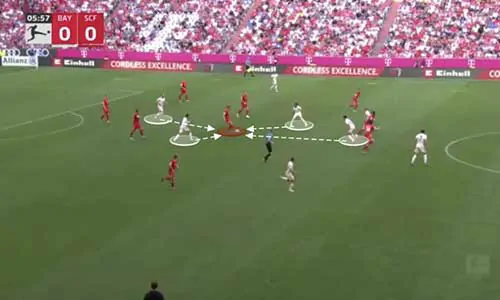
Modern football is defined by speed, rapid transitions, and relentless spatial control. Among the various tactical innovations that have shaped the modern era, few have had as profound an impact as the high-pressure defensive system known as counter-pressing. In this comprehensive tactical breakdown, we present Gegenpressing Explained: The High-Pressure Football Strategy to unpack how this philosophy revolutionized the game. By analyzing how teams transition from attack to defense, this article explores the tactical frameworks, physical demands, and strategic benefits of this system. Whether you are a coach, a player, or an avid fan, understanding this system is essential to appreciating modern tactical battles.
Table of Contents
- 1. What is Gegenpressing? The Core Philosophy
- 2. Gegenpressing Explained: The High-Pressure Football Strategy in Action
- 3. The Historical Evolution: From Rangnick to Klopp
- 4. Key Tactical Variations of Gegenpressing Explained: The High-Pressure Football Strategy
- 5. Physical and Mental Requirements for Modern Players
- 6. How Opponents Counter Gegenpressing Explained: The High-Pressure Football Strategy
- 7. Comparative Tactical Analysis: Gegenpressing vs. Alternative Styles
- 8. Frequently Asked Questions (FAQ)
- 9. Conclusion and Tactical Takeaways
1. What is Gegenpressing? The Core Philosophy
At its absolute core, Gegenpressing is a German footballing term that translates literally to “counter-pressing.” Rather than retreating into a organized defensive shape when possession is lost, the attacking team immediately hunt the ball down. Consequently, this prevents the opponent from launching a clean counter-attack and exploits their temporary disorganization.
Initially, traditional defensive theories dictated that a team should drop back to protect their goal immediately after losing the ball. However, this high-pressure strategy challenges that conventional wisdom by viewing the moment of transition as an offensive opportunity. Because the opponent has just won the ball, they are typically expanding their shape to transition into an attacking phase. This expansion makes them highly vulnerable.
Therefore, the philosophy relies on the premise that the best time to win the ball back is within the first few seconds of losing it. During these critical moments, the player who has just intercepted the ball has limited vision and spatial awareness. By suffocating this player immediately, the counter-pressing team can regain possession close to the opponent’s penalty area, creating high-value goalscoring opportunities.
2. Gegenpressing Explained: The High-Pressure Football Strategy in Action
When we look closely at Gegenpressing Explained: The High-Pressure Football Strategy, the immediate transition phase is where the magic happens. The strategy relies heavily on a structured synchronized movement where multiple players converge on the ball carrier. This is not wild chasing; it is a calculated, collective effort to close down passing lanes and physical space.
To successfully execute this, teams often utilize what is known as the “five-second rule.” If a team cannot win the ball back within five to six seconds of losing it, they must quickly fall back into a compact mid-block. This temporal constraint is vital because chasing the ball indefinitely without success leaves huge defensive gaps. Thus, the intense burst of pressure must be highly coordinated to be effective.
Furthermore, the physical positioning of players during the attacking phase—often referred to as “rest defense”—determines the success of the press. If players are too far apart when they lose the ball, they cannot close the distance quickly enough. Therefore, the core concept of Gegenpressing Explained: The High-Pressure Football Strategy relies heavily on defensive anticipation and tight structural distances during possession.
3. The Historical Evolution: From Rangnick to Klopp
While the modern version of counter-pressing feels contemporary, its historical roots stretch back several decades. Tacticians like Valeriy Lobanovskyi at Dynamo Kyiv and Arrigo Sacchi at AC Milan laid the early foundations. They utilized aggressive, zonal pressing to suffocate opponents, radically shifting how teams approached defensive phases.
However, it was Ralf Rangnick who truly pioneered and modernized the concept in Germany during the late 1990s and early 2000s. Rangnick, often called the godfather of German pressing, realized that transition moments were the most chaotic parts of a match. According to detailed tactical profiles on The Athletic, Rangnick’s structured training methods established the foundation for modern high-press architectures.
As tactical trends shifted in the 2010s, Gegenpressing Explained: The High-Pressure Football Strategy became the blueprint for modern European success under Jurgen Klopp. At Borussia Dortmund and later at Liverpool, Klopp refined the system into what he famously termed “heavy metal football.” He famously stated that a well-executed counter-press is better than any playmaker in the world, highlighting its offensive utility.
In addition, Pep Guardiola adapted his own variation of this system at Barcelona, Bayern Munich, and Manchester City. While Klopp’s style was highly direct and physical, Guardiola’s approach focused on retaining possession. He used short, rapid passes to draw opponents close together, making it incredibly easy to counter-press the moment his team lost the ball.
4. Key Tactical Variations of Gegenpressing Explained: The High-Pressure Football Strategy
It is important to recognize that not all high-pressure systems look or function the same way. Under the tactical umbrella of Gegenpressing Explained: The High-Pressure Football Strategy, teams do not just press aimlessly; they utilize distinct variations tailored to their squad’s strengths and the opponent’s weaknesses.
A. Man-Oriented Gegenpressing
In a man-oriented system, every player immediately matches up with the opponent closest to them once possession is lost. The primary objective is to deny the ball carrier any easy short passing options. Consequently, this forces the player on the ball to make a difficult individual play or clear the ball blindly downfield.
B. Space-Oriented Gegenpressing
Alternatively, space-oriented defensive movements in Gegenpressing Explained: The High-Pressure Football Strategy require players to squeeze the pitch. Instead of focusing on specific opponents, players congest the area surrounding the ball. This creates a dense net that chokes out the ball carrier, making any attempt at passing through the block statistically impossible.
C. Passing Lane-Oriented Gegenpressing
This subtle variation, highly favored by tactical masters, focuses on the “cover shadow” of the pressing players. Rather than charging directly at the ball carrier, players position themselves to block the passing lanes to the opponent’s key midfielders. As a result, the opponent is isolated, and the pressing team can anticipate and intercept the inevitable long pass.
D. Ball-Oriented Gegenpressing
Perhaps the most aggressive variation, this style involves multiple players swarming directly toward the ball itself. The focus is entirely on physical duels and intensive tackling. While highly effective at winning the ball back rapidly, it carries the highest risk of leaving massive space behind if the opponent successfully bypasses the initial wave.
5. Physical and Mental Requirements for Modern Players
To successfully execute Gegenpressing Explained: The High-Pressure Football Strategy, players must possess elite level cardiovascular fitness. The system demands constant sprinting, quick changes of direction, and rapid transitions. Without peak physical conditioning, the high line will inevitably collapse under fatigue in the latter stages of a match.
Furthermore, the cognitive demands are equally exhausting. Players must possess high tactical intelligence to read the game and identify pressing triggers instantly. A pressing trigger could be a heavy touch by an opposing defender, a slow lateral pass, or a player receiving the ball with their back to the play. If one player hesitates, the entire defensive structure can fail.
Consequently, coaches who implement this system must foster a deeply unified team culture. Counter-pressing cannot be performed by individuals acting alone; it requires absolute synchronicity. Each player must trust that their teammate is covering the space behind them, allowing them to press with maximum intensity and conviction.
6. How Opponents Counter Gegenpressing Explained: The High-Pressure Football Strategy
As with any dominant tactical trend in football, coaches eventually find ways to adapt and counter-stratify. Indeed, understanding how teams bypass the press is crucial to seeing the limitations of Gegenpressing Explained: The High-Pressure Football Strategy. Elite teams have developed several highly effective methods to exploit the aggressive nature of the high-press.
One of the most common counter-strategies is the use of direct, long-ball distribution. By utilizing a physical target man or rapid wingers, teams can bypass the congested midfield entirely. If the pressing team commits too many players forward to win the ball, a single accurate long pass can release an attacker into a massive, unprotected channel.
In addition, the rise of highly technical, press-resistant deep midfielders has changed the tactical landscape. Players who excel under pressure can use body feints, half-turns, and rapid one-touch passing sequences to play through the press. Once the initial press is broken, the counter-pressing team is often left completely exposed with too many players caught ahead of the ball.
Consequently, exploiting the vacant space behind the high line is the primary weapon against Gegenpressing Explained: The High-Pressure Football Strategy. Modern tactical variations have therefore seen pressing teams become slightly more conservative, occasionally dropping into a mid-block to prevent intelligent opponents from exploiting these vulnerable transitional areas.
7. Comparative Tactical Analysis: Gegenpressing vs. Alternative Styles
To illustrate these differences, let us examine how Gegenpressing Explained: The High-Pressure Football Strategy compares to alternative defensive models. Every style has its own risk-reward profile, as shown in the comparative analysis below.
| Tactical Style | Defensive Line | Physical Intensity | Primary Objective | Main Risk Factor |
|---|---|---|---|---|
| Gegenpressing | Very High | Extremely High | Regain ball immediately | Exposed space behind high line |
| Mid-Block Press | Medium | Moderate | Control center of the pitch | Allows opponent deep build-up |
| Low-Block (Catenaccio) | Deep / Low | Low (High discipline) | Protect the penalty area | Sustained pressure, low possession |
As highlighted by UEFA’s technical analysis reports, elite modern teams rarely stick to just one defensive style. Instead, they shift fluidly between these blocks depending on the match state, scoreline, and physical fatigue levels of their starting eleven.
8. Frequently Asked Questions (FAQ)
Q1: What is the primary objective of Gegenpressing Explained: The High-Pressure Football Strategy?
The primary objective is to regain possession of the ball immediately after losing it, preferably in the opponent’s defensive half. This prevents the opponent from launching a structured counter-attack and exploits their temporary disorganization to create quick goalscoring opportunities.
Q2: What is the “five-second rule” in counter-pressing?
The five-second rule is a tactical guideline stating that a team should try to win the ball back within five to six seconds of losing it. If they fail to do so, they must abandon the high-press and retreat into a stable, compact defensive shape to avoid being caught out of position.
Q3: Is Gegenpressing Explained: The High-Pressure Football Strategy viable for amateur teams?
While the basic concepts can be taught to amateur players, fully implementing it is highly challenging. The strategy requires exceptional physical conditioning, high spatial awareness, and deep tactical chemistry, which are difficult to maintain without professional-grade training schedules.
Q4: What are the main weaknesses of a counter-pressing system?
The main weaknesses include physical fatigue, vulnerability to accurate long balls over the top, and exposure to highly skilled, press-resistant midfielders who can bypass the first wave of pressure and exploit the vacant space behind the high defensive line.
Q5: Which managers popularized Gegenpressing Explained: The High-Pressure Football Strategy?
The strategy was heavily developed and popularized by German coaches, most notably Ralf Rangnick, who created the modern framework, and Jurgen Klopp, who applied it with massive success at Borussia Dortmund and Liverpool. Pep Guardiola also uses a highly structured, possession-based variation of the system.
Q6: How does rest defense relate to counter-pressing?
Rest defense refers to the positioning of your defensive players while your team is still in possession of the ball. Proper rest defense ensures that players are structurally close enough to the ball to initiate an immediate and effective press the exact moment possession is lost.
9. Conclusion and Tactical Takeaways
In summary, Gegenpressing Explained: The High-Pressure Football Strategy has fundamentally rewritten the modern football playbook. By shifting the focus of defensive play from passive containment to active, aggressive hunting, it has made the modern game faster, more chaotic, and incredibly exciting for spectators worldwide.
Ultimately, mastering Gegenpressing Explained: The High-Pressure Football Strategy requires a rare combination of physical dynamism and high tactical IQ. As football continues to evolve, we will undoubtedly see further innovations. However, the core principles of transitional pressure and defensive aggression will remain central to the sport for years to come.
What are your thoughts on this high-pressure tactical philosophy? Do you believe it is still the most dominant style in elite football, or have modern systems evolved past it? Leave your comments below and share this tactical breakdown with your fellow football enthusiasts!