Offside Rule Explained: A Beginner’s Guide to Football’s Most Confusing Law
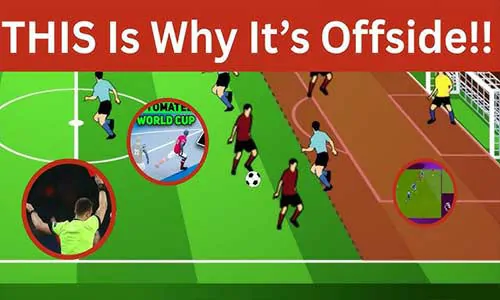
Table of Contents
- 1. Introduction to Football’s Most Discussed Law
- 2. The Offside Rule Explained: The Basic Definition
- 3. The Three Key Elements of an Offside Position
- 4. What Constitutes “Active Play” in Football?
- 5. The Offside Rule Explained: Crucial Exceptions
- 6. Why Does the Offside Rule Exist? A Historical Perspective
- 7. The Role of Referees, Assistant Referees, and VAR
- 8. Quick Reference: Common Offside Scenarios
- 9. Frequently Asked Questions (FAQs)
- 10. Conclusion & Final Thoughts
Football is universally celebrated for its simple beauty, fluid dynamics, and dramatic goals. Yet, for many newcomers, one single regulation often creates immense confusion and endless debate. This comprehensive guide presents the offside rule explained in simple, practical terms to help you master football’s most debated law.
Whether you are a casual observer watching your first World Cup or an aspiring enthusiast looking to analyze tactical setups, grasping Law 11 of the game is essential. Indeed, many goals are disallowed every weekend due to this rule, frequently altering the course of major football tournaments worldwide.
Consequently, understanding this regulation changes how you perceive matches. Instead of feeling lost during VAR checks, you will begin to anticipate defensive movements and appreciate tactical depth. Let us delve directly into the core mechanics of this fascinating rule.
The Offside Rule Explained: The Basic Definition
To begin with, we must clarify a fundamental distinction: being in an offside position is not an offense in itself. A player can stand in an offside position as much as they like, provided they do not become actively involved in the play.
An offside offense occurs only when an attacker in an offside position actively participates in play at the precise moment the ball is passed or touched by a teammate. If this happens, the assistant referee raises their flag, the referee blows the whistle, and the defending team is awarded an indirect free kick.
Furthermore, this rule ensures a fair balance between attack and defense. Without it, attackers could simply wait next to the opponent’s goalpost, a practice historically known as “cherry-picking” or “goal-hanging.” This would destroy the strategic spacing that makes modern football so captivating.
Consequently, having the offside rule explained step-by-step is vital for new fans. Let us break down the exact parameters that determine whether a player is legally positioned when a pass is initiated.
The Three Key Elements of an Offside Position
For a player to be flagged for an offside offense, several conditions must align simultaneously. According to the official laws of the game, a player is in an offside position if they meet all three of the following criteria:
- The Opponent’s Half: The attacking player must be in the opponent’s half of the field. A player can never be offside if they are standing in their own half of the pitch when the ball is played.
- Closer to the Goal Line than the Ball: The attacking player must be positioned further down the pitch than the ball itself. If the ball is ahead of the attacker, the attacker is legally onside.
- Fewer than Two Opponents: The attacking player must be closer to the opponent’s goal line than the second-last opponent. Generally, the second-last opponent is the last defending outfield player, while the last opponent is the goalkeeper.
To clarify the third point, we must look closely at how modern defensive lines operate. Because the goalkeeper is almost always the player closest to the goal line, the “second-last opponent” practically translates to the last outfield defender. However, if the goalkeeper runs up the pitch during a late corner, a defender standing on the goal line becomes the last opponent, making the next nearest defender the second-last opponent.
In addition, the ruling specifies that only the parts of the body that can legally score a goal are considered when measuring offside. This includes the head, torso, legs, and feet. On the other hand, hands and arms are completely excluded from offside evaluations because outfield players cannot legally score with them.
Why Having the Offside Rule Explained Clearly Matters in Active Play
As mentioned earlier, standing in an offside position is perfectly legal on its own. The referee will only halt the game if the player in that position becomes actively involved in the phase of play. According to The International Football Association Board (IFAB), active involvement is divided into three distinct categories:
1. Interfering with Play: This occurs when a player plays or touches a pass delivered by a teammate. This is the most straightforward scenario: if your teammate passes you the ball while you are standing behind the last defender, you are offside the moment you touch it.
2. Interfering with an Opponent: A player can be penalized even if they do not touch the physical ball. If an attacker blocks the goalkeeper’s line of sight, challenges a defender for physical possession, or makes an obvious movement that clearly impacts an opponent’s ability to play the ball, they are flagged for an offside offense.
3. Gaining an Advantage: This covers situations where the ball rebounds off a goalpost, crossbar, or an opponent. If an attacker stands in an offside position, and a teammate shots the ball against the post, the attacker cannot run to collect the rebound. Because they started from an illegal position, they have gained an unfair advantage.
Consequently, the assistant referee must carefully watch the precise frame when the passer makes contact with the ball. It is this specific moment of passing—not the moment the attacker receives the ball—that dictates whether an offense has occurred. If an attacker is in a legal position when the ball is kicked but runs past the defense while the ball is in mid-air, they are perfectly onside.
The Offside Rule Explained: Crucial Exceptions
While the regulation is strictly enforced in open play, there are several scenarios where the offside rule is temporarily suspended. Understanding these exceptions is highly beneficial for both players and spectators wishing to analyze tactical sets.
Specifically, a player can never be called offside if they receive the ball directly from one of the following set-pieces:
- A Throw-In: Attacking players can position themselves right next to the opponent’s goal line during a throw-in without any fear of being called offside. Consequently, long throw-ins are frequently used as highly potent attacking weapons in modern football.
- A Corner Kick: Because a corner kick is taken from the very edge of the opponent’s goal line, the ball is naturally ahead of all attacking players. As a result, any player receiving a corner kick directly is legally onside.
- A Goal Kick: If a goalkeeper restarts play with a direct kick from their six-yard box, an attacking forward can stand deep inside the opponent’s territory and receive the ball legally.
In this section of our offside rule explained guide, we must also highlight the concept of deliberate play by an opponent. If a defender intentionally plays the ball—such as attempting to pass it back to their goalkeeper but misplacing it—and it goes directly to an attacker standing in an offside position, the attacker is completely onside. Conversely, a simple deflection or an emergency block by a defender does not count as deliberate play, and the attacker remains offside.
Why Does the Offside Rule Exist? A Historical Perspective
To fully appreciate why this rule is structured the way it is today, we must look back at its historical origins. When formalized football began in English schools during the 19th century, many of the initial drafts featured much stricter rules than we see today.
In fact, some early variations dictated that any player standing ahead of the ball was considered “out of play,” similar to modern rugby rules. This design meant players could only pass the ball backward or sideways, resulting in highly congested matches with very little fluid movement.
To address this limitation, the Football Association introduced the “three-player rule” in 1863. Under this guideline, an attacker was onside if there were at least three defensive players between them and the goal. Over time, as defensive tactics evolved and teams perfected the “offside trap,” matches became increasingly defensive and low-scoring.
Consequently, the rules were amended in 1925 to the “two-player rule,” which dramatically increased the number of goals scored per match. The last major structural revision occurred in 1990, when IFAB declared that an attacker who is perfectly level with the second-last opponent is legally onside. This adjustment was specifically designed to favor attacking football and increase entertainment value.
The Role of Referees, Assistant Referees, and VAR
Traditionally, making offside calls fell entirely on the shoulders of assistant referees running along the touchlines. These officials must constantly align themselves with the last defending outfield player, looking in two directions at once to see both the passer and the receiver simultaneously.
Given the immense speed of modern professional football, making these split-second decisions with the naked eye is extraordinarily challenging. As a result, errors were historically common, sometimes deciding major trophies or relegation battles.
To improve accuracy, professional leagues and FIFA tournaments introduced the Video Assistant Referee (VAR) system. Today, VAR utilizes synchronized high-definition cameras to analyze tight situations. If a goal is scored and there is a suspicion of offside, virtual lines are calibrated on-screen to measure the players’ positions down to the millimeter.
Additionally, modern tournaments now utilize Semi-Automated Offside Technology (SAOT). This advanced system uses dedicated tracking cameras placed around the stadium to monitor up to 29 data points on each player’s body. Together with a sensor inside the match ball, SAOT automatically alerts the VAR room whenever an offside position is detected, significantly speeding up decision-making times.
Common Scenarios: The Offside Rule Explained in Action
To make the offside rule explained even more practical, let us explore some real-world match situations. The table below outlines common tactical scenarios that occur during professional matches, detailing whether the play is legal or illegal.
| Attacking Scenario | Ruling | Detailed Tactical Reason |
|---|---|---|
| Attacker is in their own half when the pass is made. | ONSIDE | A player cannot be penalized for offside while standing inside their own half of the pitch. |
| Attacker is level with the last defending outfield player. | ONSIDE | Being level with the second-last opponent is fully legal under the modern IFAB guidelines. |
| Attacker runs behind the defense after the pass is kicked. | ONSIDE | Offside position is judged at the precise moment of the pass, not when the ball is received. |
| Attacker stands in an offside position but does not touch the ball. | DEPENDS | Onside unless they actively block the goalkeeper’s vision or physically interfere with a defender. |
| Attacker receives the ball directly from a corner kick. | ONSIDE | There is no offside offense allowed directly from a corner kick, throw-in, or goal kick. |
Many professional pundits still struggle with these nuances during live broadcasts, which highlights why having the offside rule explained clearly is invaluable for everyday fans.
Frequently Asked Questions (FAQs)
To help consolidate your understanding, we have answered some of the most common questions regarding Law 11 below:
Q1: Can a player be offside if they receive a pass that travels backward?
A: No, a player cannot be offside if they are behind the ball when it is passed. Even if they are deeper than the defenders, passing the ball backward means the receiver is legally onside.
Q2: Does the goalkeeper always count as the last opponent?
A: Not necessarily. The rule specifies the “second-last opponent.” While the goalkeeper is usually the last opponent, if they move up the field, any two outfield defenders standing near the goal line will assume those roles.
Q3: Can a player stand in an offside position to distract defenders?
A: Only to a point. If their presence directly distracts, blocks, or interferes with a defender’s ability to play the ball, the assistant referee will blow for an offside offense.
Q4: What happens if a defender deliberately passes the ball back to an offside attacker?
A: The attacker is not penalized. Because the ball was intentionally played by an opponent, the offside restriction is lifted, and play continues normally.
Q5: Is there offside in youth or amateur football leagues?
A: Yes, the offside rule is a standard part of association football. However, some very young junior leagues (typically under-8s or small-sided games) omit the rule to make early learning simpler.
Conclusion & Final Thoughts
Ultimately, while the offside rule might initially appear confusing, breaking it down into individual components reveals its underlying logic. By understanding the three key positioning criteria, the definitions of active play, and the standard set-piece exceptions, you can easily read any game like an expert.
Moreover, the integration of video assistant technology continues to refine how this rule is applied on the world stage. Now that you have had the offside rule explained, you can appreciate the intricate tactical battles, defensive lines, and attacking runs that define the beautiful game.
What are your thoughts on how the offside rule is currently enforced with VAR? Do you prefer the traditional approach, or do you appreciate the high-tech millimeter precision? Share your thoughts in the comments section below, and don’t forget to share this guide with fellow football fans!