What Happens to Players’ Jerseys After Football Matches?
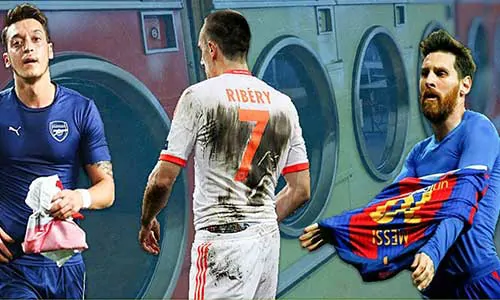
Every weekend, millions of football fans around the world tune in to watch their favorite teams battle it out on the pitch. We marvel at the spectacular goals, the tactical masterclass of the managers, and the intense physical battles. However, once the final whistle blows and the stadium lights begin to dim, a different kind of operation begins behind the scenes. Have you ever wondered, what happens to players’ jerseys after football matches? It is a question that crosses the minds of many supporters as they watch players swap shirts, throw them to fans, or walk down the tunnel drenched in sweat and grass stains.
The journey of a football shirt does not end when the referee blows the final whistle. In fact, for the kit management team, that is exactly when the real work begins. From high-stakes shirt swapping to charity auctions, professional laundry routines, and recycled materials, the lifecycle of a modern football kit is complex and highly organized. In this comprehensive guide, we will explore the fascinating world of kit management and discover exactly what happens to those iconic pieces of fabric after ninety minutes of intense action.
Table of Contents
- The Sacred Tradition of Shirt Swapping
- The Unsung Heroes: Inside the Kit Room
- How Many Shirts Does a Player Get per Match?
- Understanding What Happens to Players’ Jerseys After Football Matches
- Commercialization, Charity, and Memorabilia Auctions
- Behind the Scenes: What Happens to Players’ Jerseys After Football Matches in Lower Leagues?
- The Green Initiative: Recycled Shirts and Environmental Impact
- Summary Table: The Lifecycle of a Match-Day Jersey
- Frequently Asked Questions
- The Final Verdict on What Happens to Players’ Jerseys After Football Matches
The Sacred Tradition of Shirt Swapping
One of the most visible answers to our main question is the iconic post-match shirt swap. This tradition is a symbol of mutual respect and sportsmanship between opposing players. Whether it is two legendary superstars acknowledging each other’s greatness or a young debutant asking for the shirt of their childhood idol, shirt swapping is deeply embedded in football culture.
Historically, the tradition of exchanging shirts began in 1931. Following a historic victory of the French national team over England, the French players requested the English jerseys as souvenirs to commemorate the historic win. Since then, the practice has grown into a global phenomenon. Today, players often arrange swaps beforehand, especially when playing against world-class talents like Lionel Messi or Cristiano Ronaldo.
But what happens to these swapped shirts? In most cases, players take them home to build their personal collections. Many elite footballers have dedicated trophy rooms where they display framed jerseys of their toughest opponents. On other occasions, these shirts are gifted to family members, friends, or donated to club museums to celebrate historic matches.
The Unsung Heroes: Inside the Kit Room
Behind every successful football club is an elite, highly organized kit management team. These professionals work tirelessly to ensure that every player has everything they need for training and matchdays. When considering what happens to players’ jerseys after football matches, the kit manager is the central figure who decides the fate of every single garment.
Immediately after the match, the kit managers collect all the dirty kit bags from the dressing room. This includes jerseys, shorts, socks, base layers, and warm-up gear. For home games, clubs utilize massive industrial washing machines located within the stadium’s laundry facilities. For away matches, kit managers often transport the dirty gear back to the training ground in specialized vans, or in some cases, use local laundry services arranged in advance.
Washing these jerseys is not as simple as throwing them into a standard washing machine. Modern football shirts are made of highly advanced, lightweight, synthetic fabrics designed to wick sweat away. Consequently, they require specific wash cycles, temperature controls, and specialized detergents to protect the delicate heat-applied club crests, player names, numbers, and sponsor logos from peeling off.
How Many Shirts Does a Player Get per Match?
To fully grasp what happens to players’ jerseys after football matches, it is important to understand the sheer volume of kit prepared for a single game. Elite clubs do not simply provide one shirt per player. Instead, kit managers prepare multiple options to cover any potential scenario on the pitch.
Typically, a professional player is allocated at least three shirts per match:
- First Half Jersey: The shirt the player wears during the pre-match warm-up and the first forty-five minutes of play.
- Second Half Jersey: A fresh, dry, clean shirt waiting in the dressing room at halftime. Many players prefer switching to a fresh shirt to maintain comfort and avoid playing in heavy, sweat-soaked fabric.
- Spare/Emergency Jersey: An identical third shirt kept on standby. This is crucial in case a player’s shirt gets ripped during a physical battle, or if blood gets on the fabric. According to standard refereeing guidelines, a player cannot play with blood on their kit, meaning an immediate change is mandatory.
This means that for a squad of twenty match-day players, the kit management team must prepare, print, and transport at least sixty custom jerseys for every single fixture. The logistics behind this operation are incredibly precise.
Understanding What Happens to Players’ Jerseys After Football Matches
Now, let us delve deeper into the exact distribution channels. What happens to players’ jerseys after football matches depends greatly on the context of the game, the profile of the player, and the financial status of the club. Generally, a match-worn jersey will follow one of five primary pathways:
First, the jersey may be kept by the player themselves as a memento, especially if they achieved a personal milestone during the match, such as scoring a hat-trick, making their debut, or securing a championship title. Second, as discussed, it can be swapped with an opponent. Third, the club might retain the jersey for promotional purposes, corporate sponsors, or display in the official club museum.
Fourth, and increasingly common in the modern era, the shirt is claimed by the club’s commercial or charitable foundation. Finally, in less glamorous circumstances, the shirt is thoroughly washed and prepared to be worn again in a future fixture. This last path is highly common in lower divisions where budgets are tight.
Commercialization, Charity, and Memorabilia Auctions
In recent years, the market for match-worn football memorabilia has experienced exponential growth. Collectors and fans around the world are willing to pay thousands of dollars to own an authentic piece of sporting history. Consequently, clubs have recognized the immense potential of utilizing match-worn kits for charitable and commercial endeavors.
Many top-tier European clubs now partner with specialized online auction platforms. Through these partnerships, the very shirts worn by players during a live match are packaged, authenticated, and auctioned off to the highest bidder. The proceeds from these auctions frequently go toward the club’s charitable foundation, supporting local community initiatives, youth development programs, or global humanitarian causes.
To ensure authenticity, these shirts are rarely washed before being auctioned. They are collected directly from the dressing room, placed in sealed bags, and verified using unique serial numbers or smart technology tags embedded within the fabric. For collectors, the presence of pitch dirt, grass stains, and sweat only adds to the historical value and authenticity of the item.
If you want to read more about the official regulations surrounding player equipment and match preparations, you can refer to the comprehensive guidelines set by FIFA, the global governing body of football.
Behind the Scenes: What Happens to Players’ Jerseys After Football Matches in Lower Leagues?
It is easy to watch Premier League or Champions League matches and assume that every football club operates with an unlimited supply of gear. However, the reality of what happens to players’ jerseys after football matches in lower leagues is vastly different. Semi-professional and lower-division clubs do not have the luxury of unlimited budgets or multi-million dollar apparel sponsorship deals.
In the lower tiers of the football pyramid, resourcefulness is key. Kit managers do not prepare three new shirts per player for every game. Instead, players are typically assigned a limited number of kits to last them the entire season. These shirts are meticulously washed, repaired, and hung back up in the dressing room ahead of the next fixture.
In these leagues, players are often prohibited from swapping shirts with opponents or throwing them into the crowd. Doing so can result in a fine or the player being charged out of their own pocket to cover the cost of a replacement. While elite stars can swap shirts without a second thought, lower-league players must treat their kits with extreme care to ensure they last the duration of a grueling campaign.
The Green Initiative: Recycled Shirts and Environmental Impact
As global awareness regarding environmental sustainability continues to rise, the football industry has had to adapt. Major sports apparel brands like Adidas, Nike, and Puma have made significant strides in reducing the carbon footprint associated with manufacturing football kits. This shift directly influences our understanding of what happens to players’ jerseys after football matches when they reach the end of their usable life.
Many modern kits are manufactured using 100% recycled polyester, sourced from ocean plastic waste and recycled plastic bottles. This initiative not only prevents plastic from polluting marine ecosystems but also uses significantly less energy during the production phase. When a jersey is damaged beyond repair or when a season concludes, clubs increasingly participate in recycling programs where old kits are shredded and repurposed into new training wear, playground surfaces, or turf underlays.
Additionally, clubs are encouraging fans to participate in these circular economies by setting up recycling drop-off points at stadiums, ensuring that the passion for the beautiful game does not come at the expense of our planet.
Summary Table: The Lifecycle of a Match-Day Jersey
To summarize the complex logistics we have discussed, the table below provides an overview of the typical destinations for a professional football jersey after a match:
| Destination | Primary Purpose | Commonly Seen In |
|---|---|---|
| Shirt Swapping | Sign of mutual respect, building player collections. | All professional levels (primarily top tiers) |
| Charity Auctions | Raising funds for community and humanitarian causes. | Elite clubs (Premier League, La Liga, etc.) |
| Club Archives/Museums | Preserving club history and displaying historic milestones. | Historic or high-stakes matches |
| Laundry & Reuse | Cost saving, preparing kits for the next matchday. | Lower divisions and semi-professional leagues |
| Gifts to Fans | Fan engagement, showing appreciation for travelling support. | Post-match celebrations (all leagues) |
Frequently Asked Questions
Are football jerseys washed and reused in the Premier League?
In the Premier League, shirts are rarely reused for multiple matches. Due to lucrative sponsorship deals and massive commercial demand, players are usually provided with fresh, custom-printed jerseys for every single game. However, unused spare shirts may be kept or integrated into future training sessions.
Do players have to pay for the shirts they give away?
At elite clubs, players generally do not pay for shirts they give away or swap, as these expenses are covered by the club’s equipment budget and technical sponsors. However, in lower leagues or during cup runs for semi-professional teams, players may indeed be charged a nominal fee if they decide to keep or swap their match kit.
What happens to players’ jerseys after football matches when they get blood on them?
If a jersey gets stained with blood during play, the player must immediately change into a clean, spare jersey to comply with health and safety regulations. The blood-stained jersey is collected by the kit management team. Depending on the club’s resources, it is either treated with specialized stain removers or discarded safely if the stain cannot be removed.
Do players get to keep their shirts after a World Cup match?
Yes, international tournaments like the FIFA World Cup are highly sentimental. Players almost always keep their shirts or swap them with opposing players to commemorate the occasion. National football associations prepare multiple customized jerseys for every tournament match, featuring the date, venue, and opponent printed on the chest.
Can fans buy authentic match-worn jerseys?
Yes, fans can purchase authentic match-worn jerseys through official club charity auctions or specialized sports memorabilia platforms. These shirts are usually accompanied by certificates of authenticity to verify that they were actually worn by the player during a specific match.
How do kit managers prepare jerseys for away matches?
For away fixtures, kit managers pack massive skip bins containing all player kits, training gear, medical supplies, and spare apparel. This equipment is transported via road or plane to the destination stadium well ahead of the players’ arrival, ensuring the dressing room is set up perfectly beforehand. For more insight into how these logistics work, you can follow updates on BBC Sport, which frequently covers behind-the-scenes football stories.
The Final Verdict on What Happens to Players’ Jerseys After Football Matches
In conclusion, the seemingly simple piece of fabric worn by a footballer during a match undergoes an incredibly detailed journey once the game concludes. Whether a shirt is swapped as a sign of respect, auctioned off to raise vital funds for local charities, archived in a prestigious club museum, or meticulously washed to fight another day in the lower leagues, its post-match life is a testament to the complex operations running behind the scenes of the beautiful game.
The next time you watch a match and see a player pull their shirt off at the final whistle, you will know exactly what goes into managing that piece of football history. The tireless work of kit managers, combined with modern commercial opportunities and sustainability drives, ensures that every single jersey is utilized to its full potential.
What is your favorite post-match shirt-swapping story in football history? Let us know in the comments below, and don’t forget to share this article with your fellow football fans!